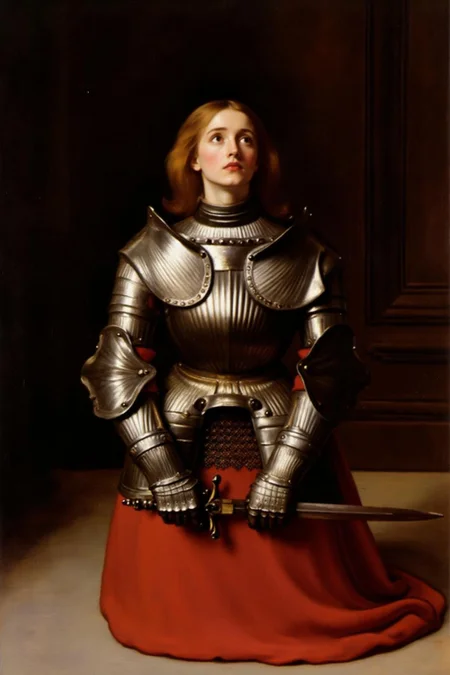

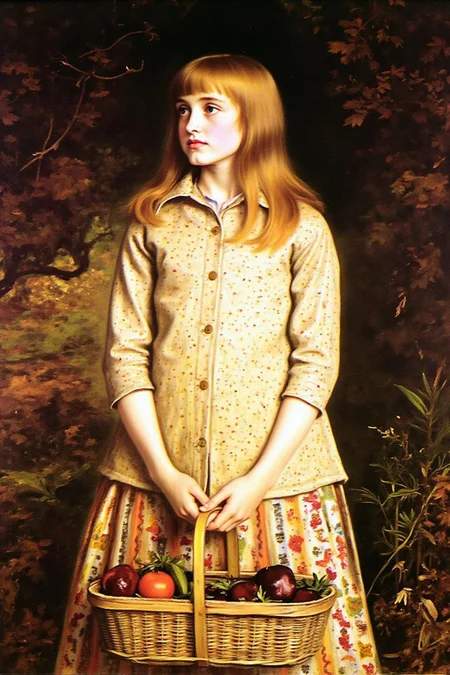

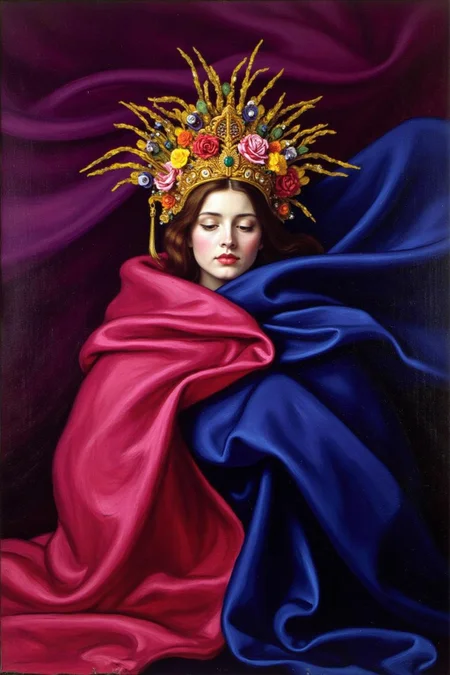
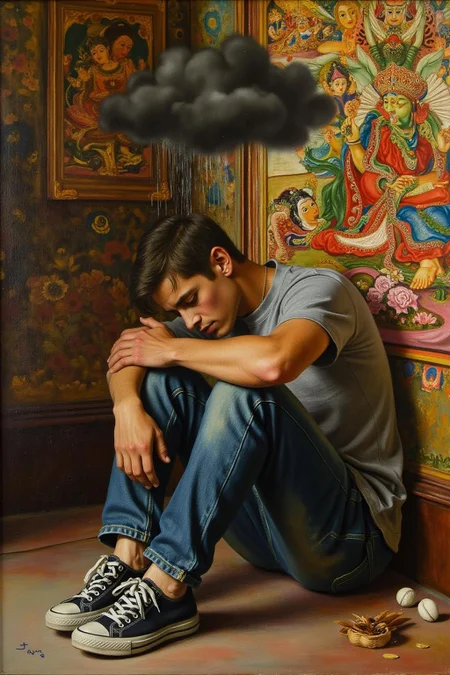

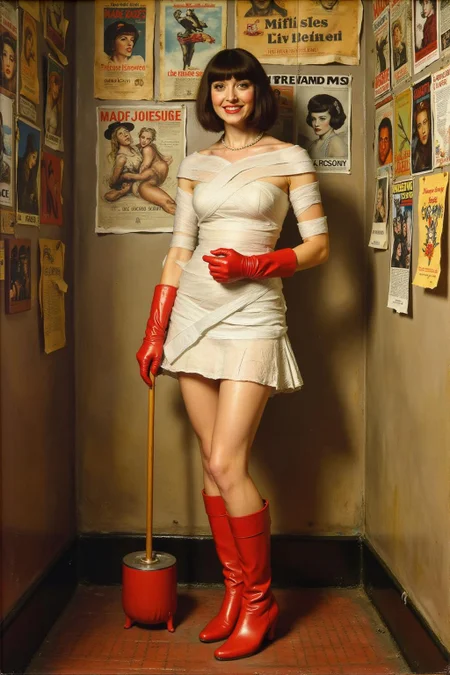
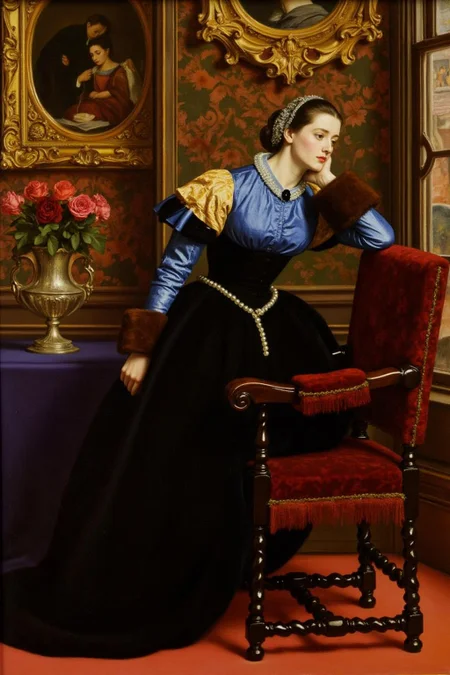

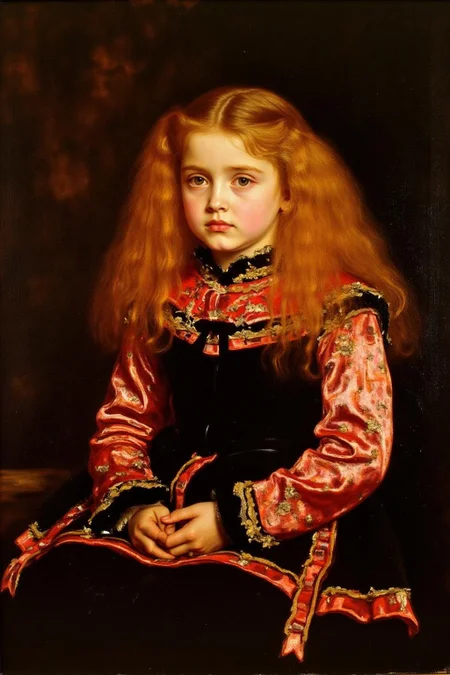
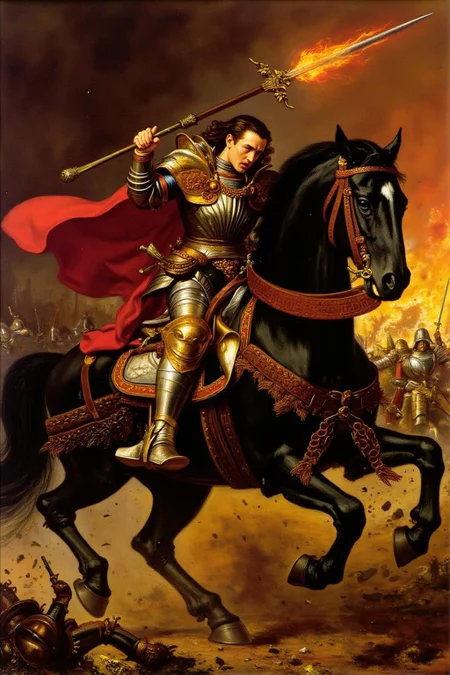
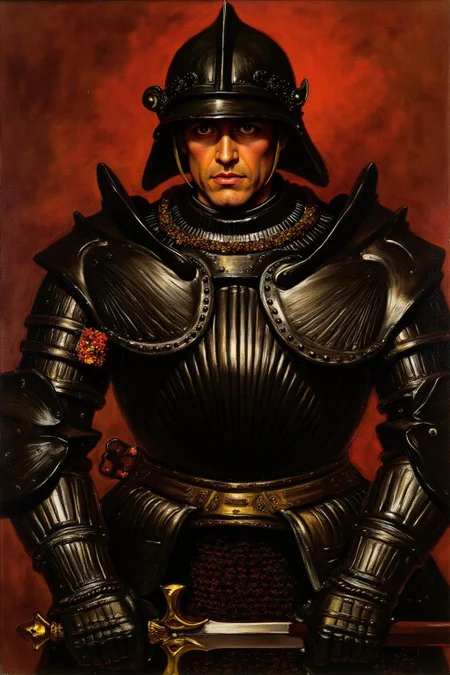
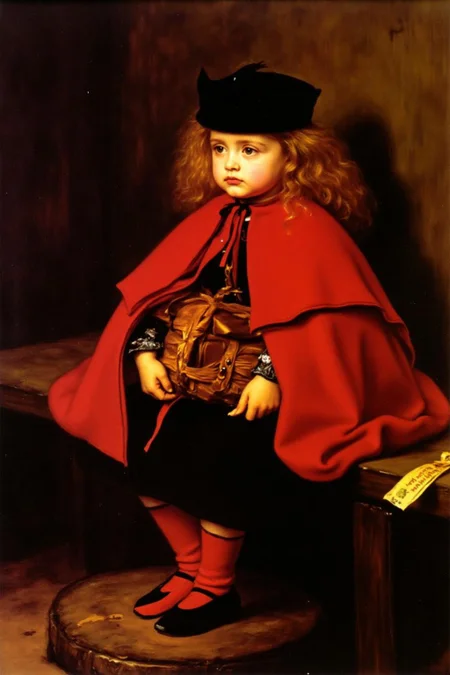

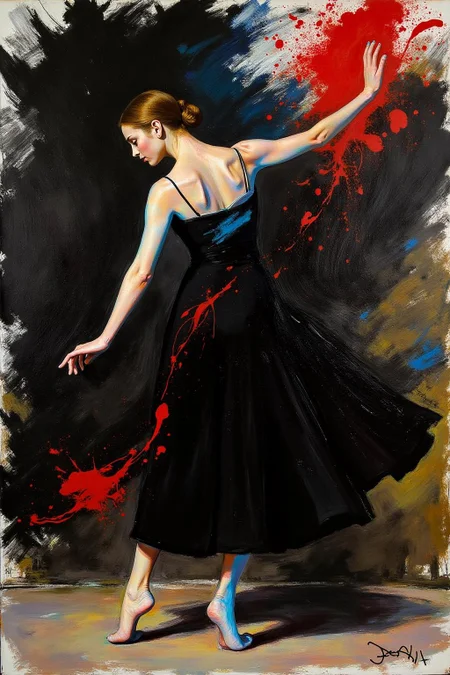

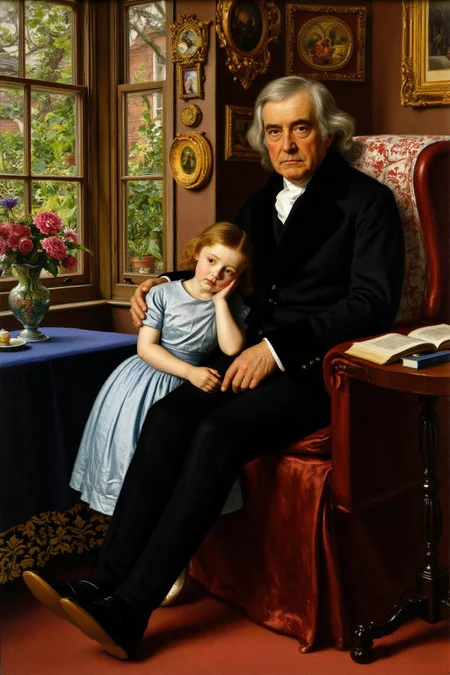

Trained on 17 paintings by Pre-Raphaelite Brotherhood member Sir John Everett Millais (June 8, 1829-August 13, 1896). To see his works, please go to https://www.wikiart.org/en/john-everett-millais.
Here is another LoRA for a member of the Brotherhood: https://civarchive.com/models/1149501/pre-raphaelite-brotherhood-dante-gabriel-rossetti-portrait-style
From ChatGPT:
 Portrait of John Everett Millais by Charles Robert Leslie, 1852
Sir John Everett Millais (June 8, 1829-August 13, 1896) was a British painter and illustrator, renowned as one of the founding members of the Pre-Raphaelite Brotherhood, an influential art movement in the mid-19th century. Millais is celebrated for his technical mastery, vibrant use of color, and ability to capture intricate detail and emotional depth in his works. Over his career, he transitioned from the detailed and idealized style of the Pre-Raphaelites to a more commercially successful, broader approach, becoming one of the most prominent artists of the Victorian era.
Biography
Early Life:
Millais was born on June 8, 1829, in Southampton, England, to a wealthy family.
Recognized as a child prodigy, he was admitted to the Royal Academy Schools in London at the age of 11, making him the youngest-ever student to enroll.
Founding the Pre-Raphaelite Brotherhood:
In 1848, Millais, along with Dante Gabriel Rossetti and William Holman Hunt, founded the Pre-Raphaelite Brotherhood (PRB). The group rejected the academic conventions of their time, seeking to return to the detail, color, and complex compositions of early Renaissance (pre-Raphael) art.
Later Career:
In the 1860s, Millais moved away from the meticulous style of his early works to adopt a looser and broader brushwork style. This shift marked the beginning of his commercial success, especially with portrait commissions.
He became a full member of the Royal Academy in 1863 and later served as its president in 1896.
Death:
Millais died on August 13, 1896, from throat cancer. He was buried in St. Paul’s Cathedral, London, as a testament to his importance in British art.
Artistic Style
Pre-Raphaelite Phase:
Millais’s early works epitomize the Pre-Raphaelite principles of intense detail, vivid color, and an emphasis on nature and realism.
He often worked outdoors, carefully observing and recording natural elements to achieve a striking level of detail.
Later Phase:
His later works featured broader brushstrokes and a more conventional, academic style, which appealed to Victorian tastes.
He became one of the most successful portrait painters of his era.
Themes:
Millais explored a range of themes, including literary subjects, biblical stories, historical events, and portraits.
He had a keen ability to convey emotion and narrative, making his works deeply engaging.
Notable Works
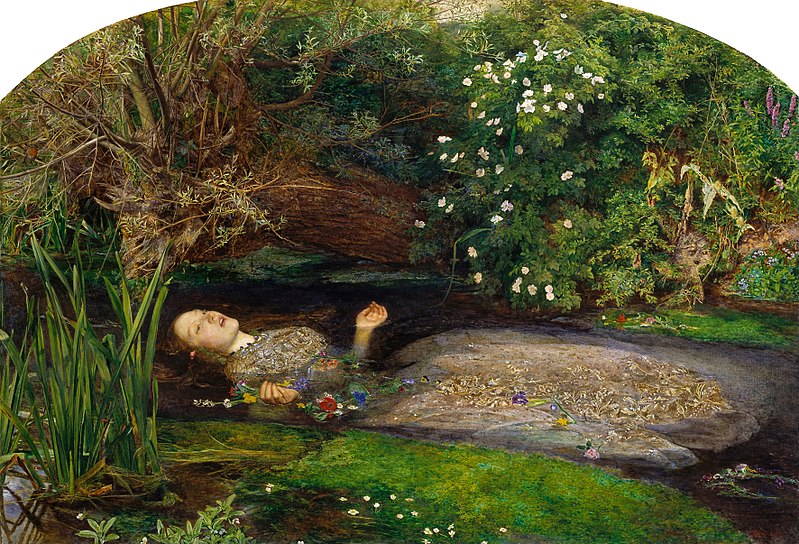
Ophelia (1851–1852):
Perhaps Millais’s most famous painting, depicting the tragic character Ophelia from Shakespeare’s Hamlet. The painting is celebrated for its vibrant detail, the naturalistic depiction of flora, and its haunting beauty.
The model for Ophelia, Elizabeth Siddal (Dante Gabriel Rossetti's wife), posed in a bathtub for hours, contributing to the painting's realism.
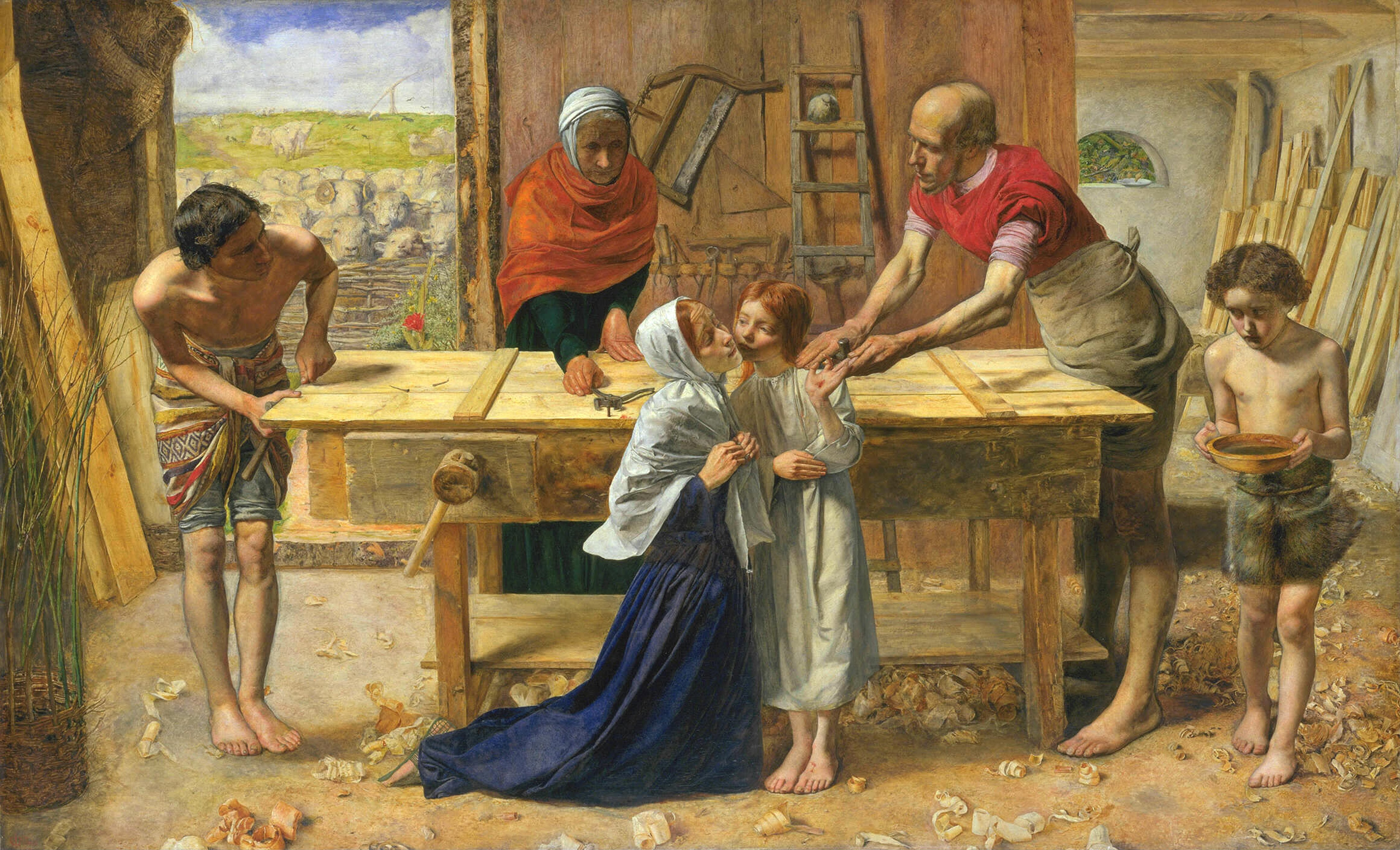
Christ in the House of His Parents (1850):
A controversial early work depicting a young Christ in a carpentry workshop, notable for its unidealized, realistic portrayal of biblical figures.
Critics initially condemned the work for its perceived lack of reverence, but it is now regarded as a masterpiece.

The Blind Girl (1856):
This poignant painting shows two girls, one of whom is blind, sitting in a rural landscape after a storm. It explores themes of sensory experience and human vulnerability.

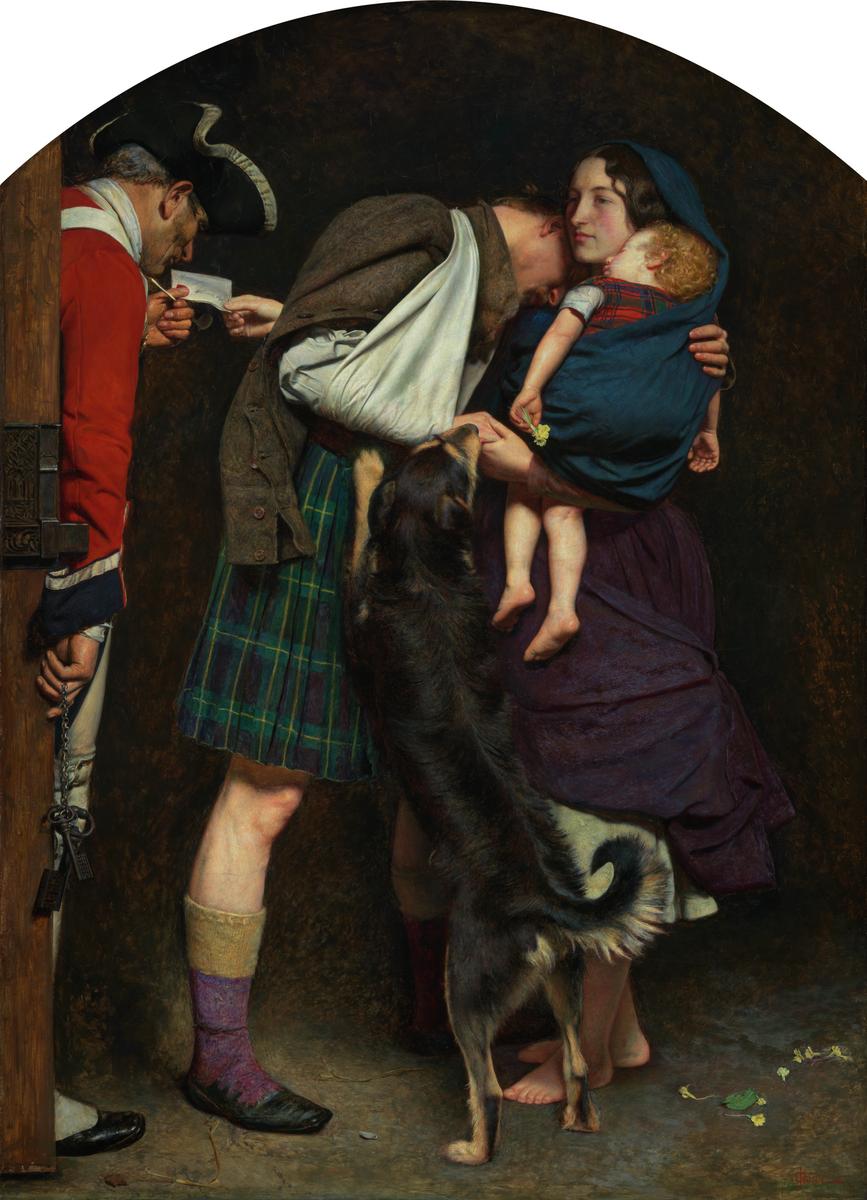
The Order of Release (1853):
A historical painting depicting a Jacobite soldier being released from prison, with his wife presenting the release papers. It exemplifies Millais’s ability to convey dramatic emotion and narrative.

Bubbles (1886):
Originally a soap advertisement, this painting became widely popular and is emblematic of Millais’s later commercial success.



Influence and Legacy
Impact on the Pre-Raphaelite Movement:
Millais played a critical role in defining the aesthetic and ideals of the Pre-Raphaelites, which influenced a generation of artists and reshaped 19th-century British art.
Commercial Success:
His later portraits and genre paintings appealed to Victorian society, making him one of the wealthiest artists of his time.
Criticism and Evolution:
Some critics felt that his shift from Pre-Raphaelite ideals to a more commercial style diluted his artistic integrity. Nevertheless, this evolution ensured his financial success and broad public appeal.
Enduring Appeal:
Today, Millais’s works, particularly Ophelia, are celebrated for their technical brilliance and emotional depth. His contributions to both the Pre-Raphaelite Brotherhood and Victorian art remain significant.
Interesting Facts
Millais met his wife, Effie Gray, under scandalous circumstances. Effie was previously married to John Ruskin, who annulled their marriage, allowing her to marry Millais.
He painted outdoors extensively and insisted on realism in his work, even lying on his back in a field to capture the perfect angle of foliage for Ophelia.
His portraits included notable figures of his time, such as Gladstone and Tennyson.
John Everett Millais was a master of both meticulous Pre-Raphaelite detail and broader, more accessible portraiture. His ability to innovate and adapt ensured his place as one of the great artists of the 19th century, leaving behind an enduring artistic legacy.
Description
This is epoch 10, the rest are here: tensor. art/models/822863619051186124/John-Everett-Millais-1-CapD6C5-2025-01-25-23:21:29-Ep-10
LUX.1 - dev-fp8
Trigger: jem1 painting
Repeat: 20 Epoch: 10 (17 1024x1024 images for 3400 total steps)
Unet LR: 0.0005 Scheduler: cosine Optimizer: AdamW
Network Dim: 6 Alpha: 3
Epoch Loss
1 0.377
2 0.379
3 0.380<-
4 0.370
5 0.364
6 0.365
7 0.359
8 0.342
9 0.331 <- lowest
10 0.350 <-