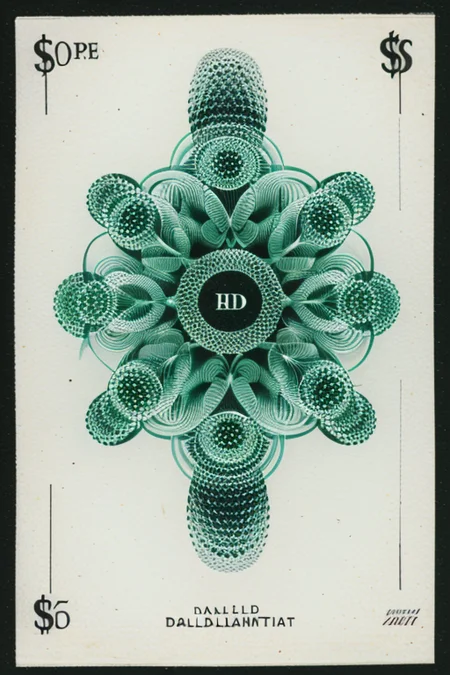
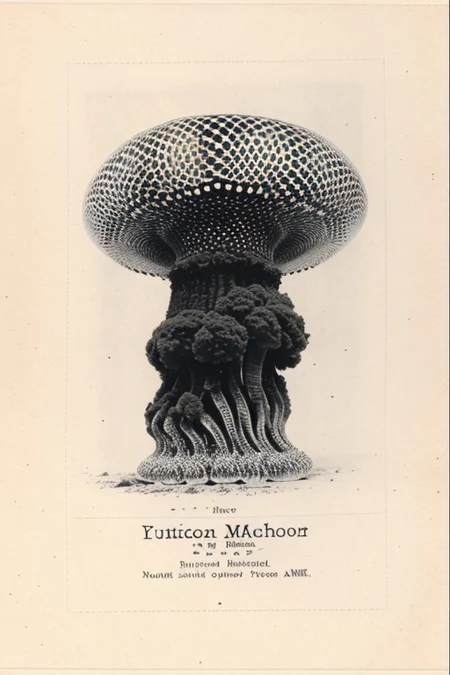
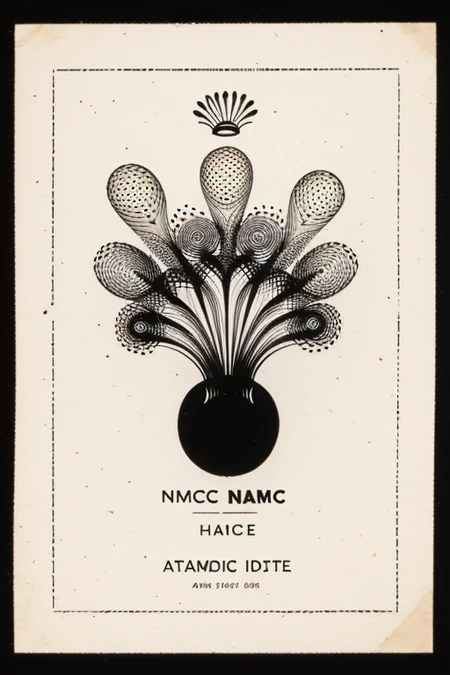
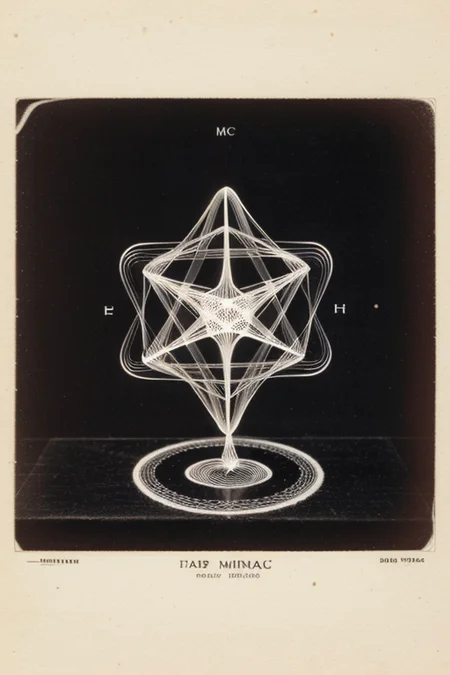
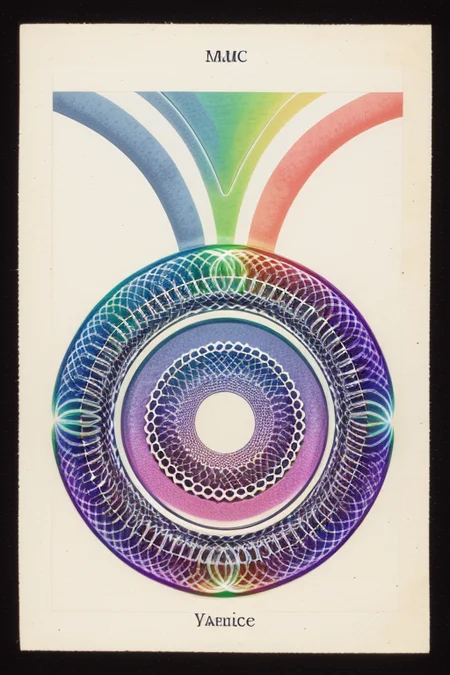
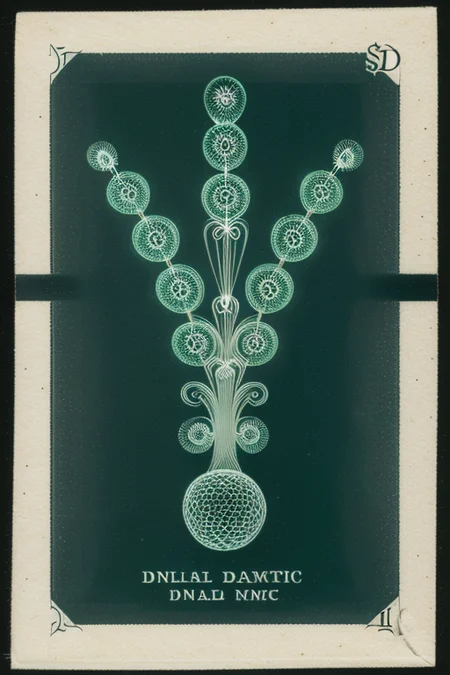
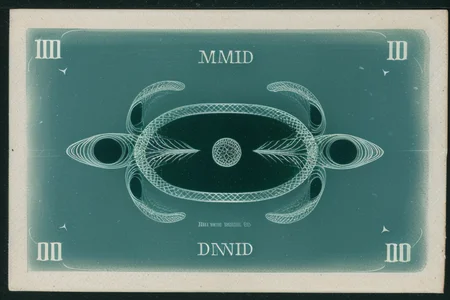
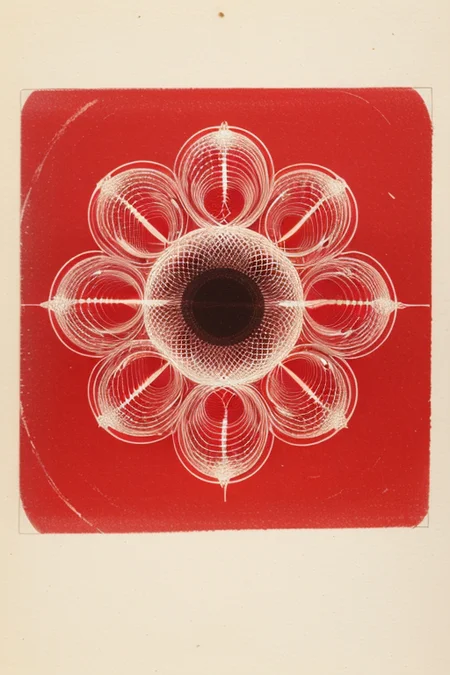
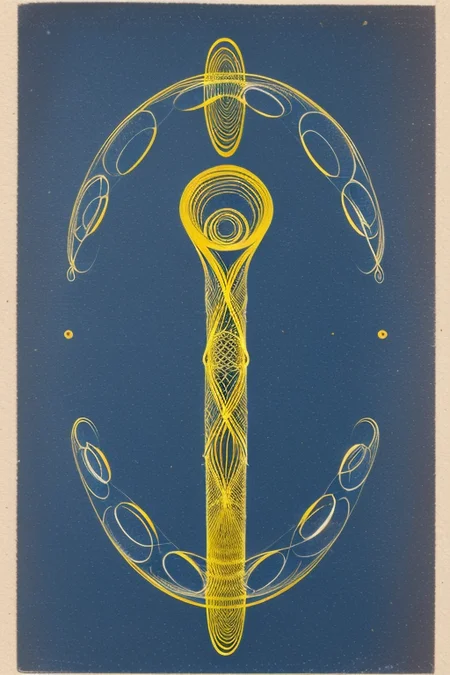
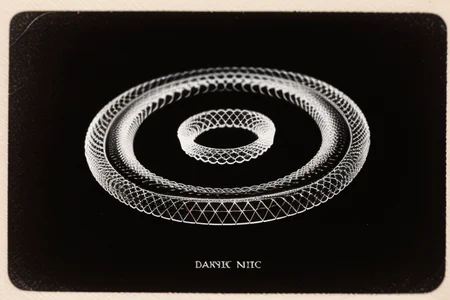
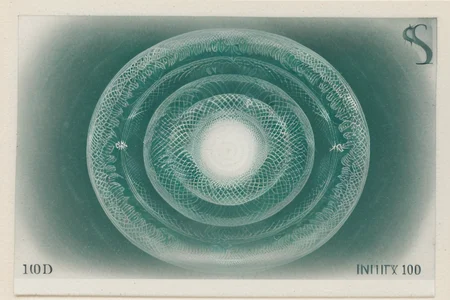
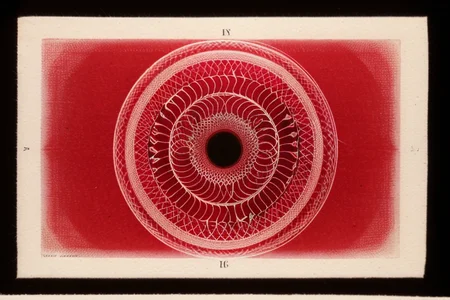
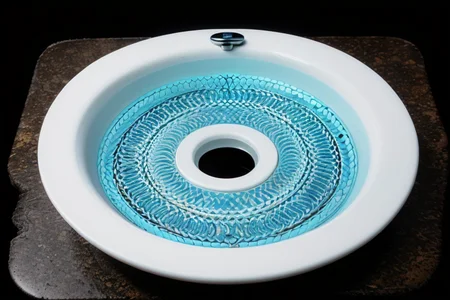
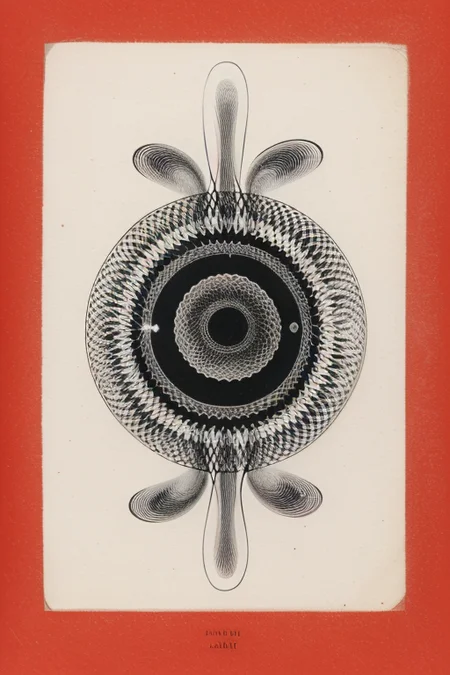
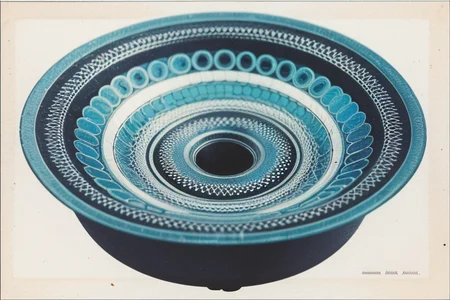
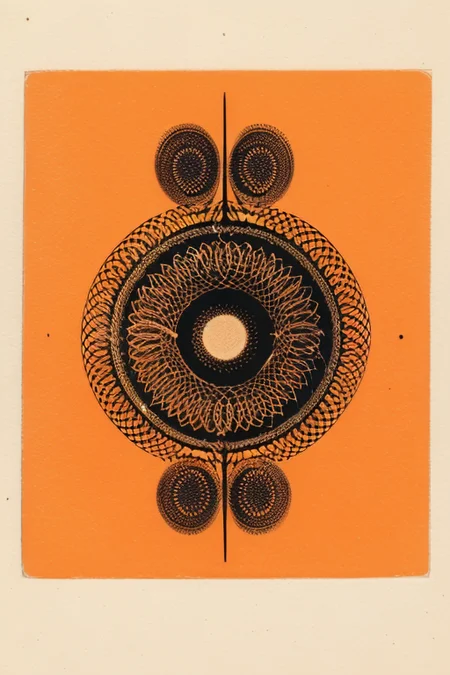
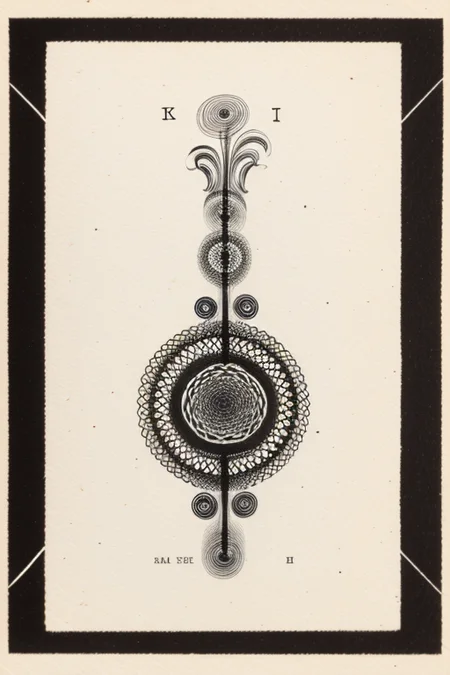
Edward J. Woolsey (1803-1872) was heir to a mercantile fortune, and his wife/first cousin Emily Aspinwall was heiress to a shipping fortune — both of which gave him lots of free time to futz around with the hot new creative technology of the 19th century, photography. In 1869, he published, quasi-anonymously, a volume titled Specimens of Fancy Turning Executed on the Hand or Foot Lathe; With Geometric, Oval, and Eccentric Chunks, and Elliptical Cutting Frame. It featured 30 prints of spiralized geometric designs on albumen silver prints, all cut with a lathe.
What is "fancy turning," or its more common name today, ornamental turning? From Wikipedia:
Ornamental turning is a type of turning, a craft that involves cutting of a work mounted in a lathe. The work can be made of any material that is suitable for being cut in this way, such as wood, bone, ivory or metal...Ornamental turning, also called Complex turning, is executed on a lathe with attachments which convert that plain circular section to variants of outline; these range from a simple series of cuts taken at intervals around the work (so producing grooves or bumps on the surface) to non-circular movements whereby the whole of the circular shape is removed to give a completely different form.
Woolsey's innovation was taking an art form usually reserved for three-dimensional objects and refactoring it on what amounted to a flat photographic plate. "My only intention is to show the powers of the lathe," he wrote, "and to stimulate others to carry on more completely and systematically similar illustrations; commencing with circles, and advancing with the eccentric, oval, geometric, straight-line, and rose engine chucks, both simple and combined."
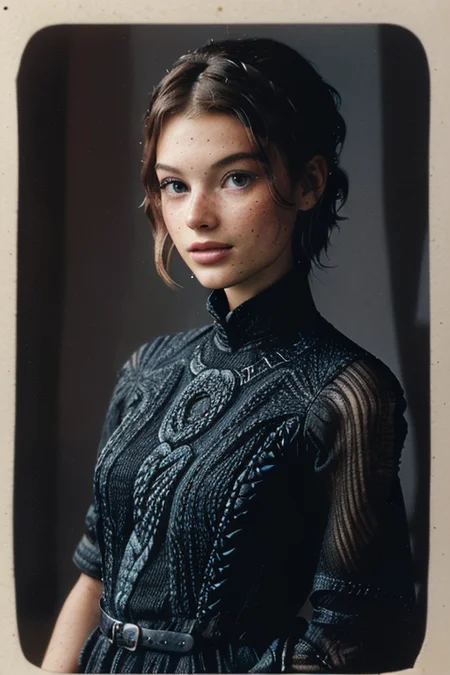
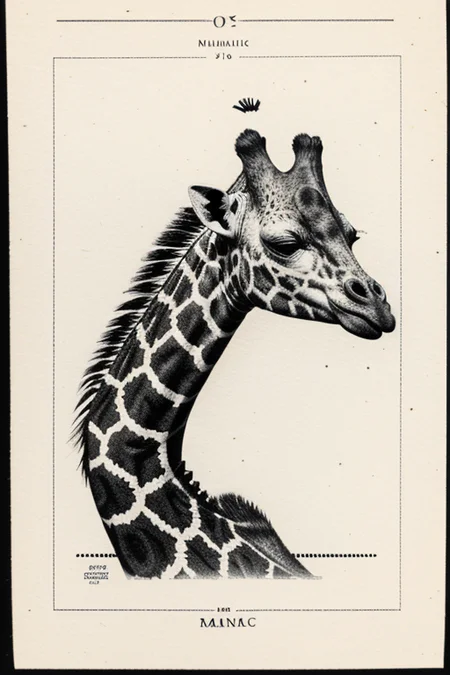
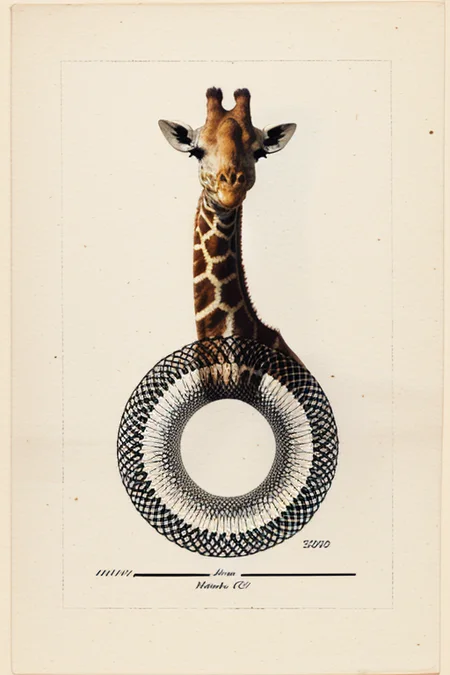
Well, what better way to carry on Woolsey's form than with generative AI?
This embedding is based on the 30 images Woolsey printed in Specimens of Fancy Turning; you can see them all here. They were cooked for a total of 300 steps on base SD 1.5: 16 vectors per token, a 0.004 learning rate, a batch size of 6, and 5 gradient steps.
How useful it will be as an influence on a broader design is open to debate; it's a pretty dominant force in a prompt, requiring low levels if you want it to play well with others. But it effortlessly creates beautiful spiral-driven images that can be pushed in interesting directions.
Description
First release.