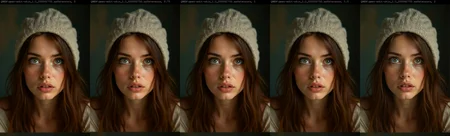
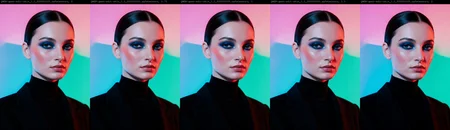
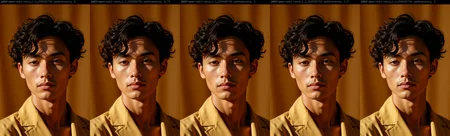
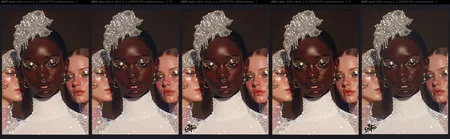
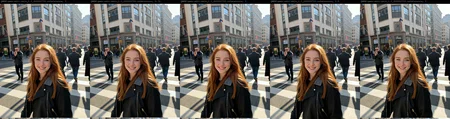
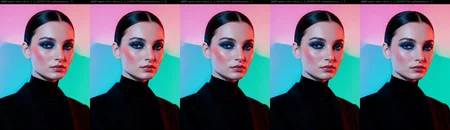
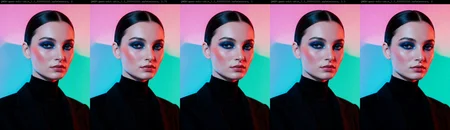
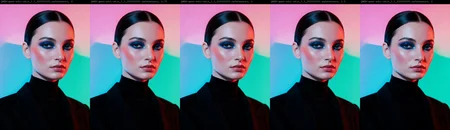

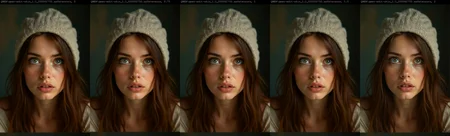
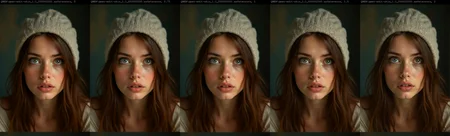
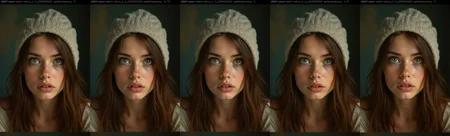
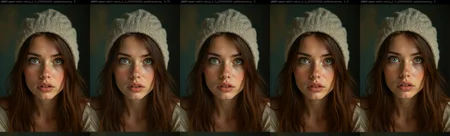
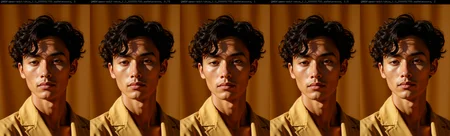
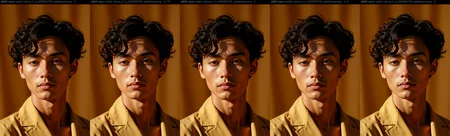
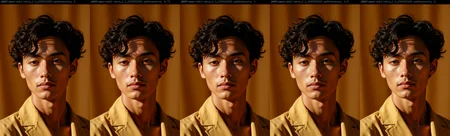
Finetuned LoRA for Enhanced Skin Realism in Qwen-Image-Edit-2509
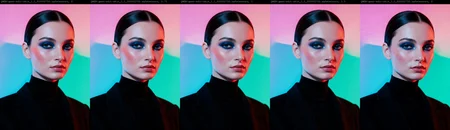
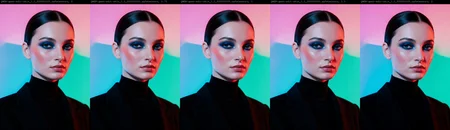
Note: Check the version differences. In Version 1.1 as an example, I've also uploaded previous steps of this version training, so you can download from steps 1750 all the way to 2750 to suit your needs. I attached full comparison images across each LORA and each step count for you to see the sweet spot for your workflows.
You can also download the comparision workflow I made here:
https://civarchive.com/models/2100345/lora-xyz-compare-workflow
This repository contains a finetuned Low-Rank Adaptation (LoRA) model designed to enhance the realism and detail of human skin in images. The LoRA has been trained on top of the powerful Qwen/Qwen-Image-Edit-2509 model, leveraging its advanced image editing capabilities to focus specifically on generating more natural and detailed skin textures.
This model was trained for 5000 steps on a local RTX 5090 using the AI-Toolkit. The resulting LoRA is ideal for photographers, digital artists, and anyone looking to improve the quality of human subjects in their generated or edited images.
Model Description
The qwen-edit-skin LoRA is a specialized finetuning of the Qwen/Qwen-Image-Edit-2509 base model. The base model is a versatile image editor with strong capabilities in multi-image editing and maintaining single-image consistency, particularly in preserving personal identity. This LoRA builds upon that foundation to specifically address the nuances of human skin, adding detail and realism that may not be present in the original generations.
The training was conducted using this fork of AI ToolKit, a comprehensive suite for finetuning diffusion models. The process for curating the dataset involved reverse modification of subject skin details as follows:
Taking real images of versatile subject portraits with skin exposed
Captioning each of these as our “Target” (THE AFTER) images for the final outcome expected in a standard Qwen Edit workflow
Editing the image in Photoshop to add more gaussian blur and smoother skin tones, to make the skin texture, tone and pores less visible
These became our “Control” (The BEFORE) images for Qwen Edit training.
Training Details
The model was finetuned with the following key parameters, which can be found in the accompanying config.yaml file:
Hardware:
GPU: NVIDIA RTX 5090
Training Configuration:
Training Steps: 5000
Batch Size: 1
Gradient Accumulation: 1
Learning Rate: 1.0e-04
Optimizer: adamw8bit
Noise Scheduler: flowmatch
Resolution: The model was trained on a dataset with resolutions of 512, 768, and 1024 pixels.
Precision: bf16
Network Architecture:
Type: LoRA
Linear Rank & Alpha: 16
Convolutional Rank & Alpha: 16
The choice of adamw8bit as the optimizer is significant as it reduces the memory footprint of the training process, allowing for more efficient finetuning on consumer-grade hardware without sacrificing performance. The flowmatch noise scheduler is a modern approach that can lead to more efficient training and high-quality image generation.
A notable aspect of the LoRA architecture is that the alpha values for both linear and convolutional layers are set to be equal to their respective rank (16). This balanced approach is a common starting point for LoRA training, ensuring that the learned adaptations are applied with a proportional scaling factor, which can help in preventing overfitting while allowing the model to learn the desired new features effectively.
How to Use
To use this LoRA, you will need to load the base model Qwen/Qwen-Image-Edit-2509 and then apply the finetuned LoRA weights loaded as qwen-edit-skin.safetensors. Previous step versions of the weights are uploaded for reference but the final version is qwen-edit-skin.safetensors. You can also leverage the example workflow attached in the repo for ComfyUI to compare the results across different weights.
The recommended weight is between 1 and 1.5, the examples provided show weights up to 2 only to show the effect of the Lora with a strength considered too high for effect.
Intended Use
This LoRA is intended for creative and artistic purposes to enhance the realism of human skin in digital images. It can be used by:
Digital Artists: To add finer details and textures to the skin of their characters.
Photographers: For retouching and enhancing portraits.
AI Art Enthusiasts: To generate more lifelike images of people.
Limitations and Bias
This model is a finetuning of a large-scale, pre-trained model and may carry some of its inherent biases. The training dataset for this LoRA was focused on improving skin details and may not represent the full diversity of human skin tones and types equally. Users should be aware of this and use the model responsibly. The output of the model is influenced by the input prompt, and users are encouraged to use descriptive and inclusive language to guide the generation process.
Disclaimer: This model is intended for artistic and creative purposes. Users are responsible for the content they create and should adhere to ethical guidelines and respect the privacy and dignity of individuals.
Trigger words
You should use make the subjects skin details more prominent and natural to trigger the image generation.
Description
Fixed AI-Toolkit error with control vs target dataset paths. Training result was quicker convergence, less steps required, less extra "noise" or unexpected changes in areas other than skin
FAQ
Comments (20)
It seems to add nice detail to the skin. Great job! One small drawback that I notice is that at full or near full strength, the LoRA tends to create splotches that are visible on uniform backgrounds. Is this something that can be avoided?
It would be worth trying the new version 1.1 to see if you experience the same issue. It was trained differently to avoid as much impact elsewhere in the images
I see nearly zero positive effect and visible grid pattern already at strength 1
For those of you that are using NSFW loras with this lora, learn from my mistakes, here are my settings that work amazing with excellent fidelity in the generated images:
- Workflow: If you have an NVIDIA 4xxx/5xxx card, use the ComfyUI template for Qwen Image Edit 2509, if you don't, use a quantized workflow that uses GGUF
- Lora: Qwen Image Lightning 2,0 - 8-step (set your workflow to go 10 steps) - Str 1.0
- Lora: This lora, Str 1.0
- Snofs Lora: Str 0.8 (https://civitai.com/models/1972981/qwen-sex-nudes-other-fun-stuff-snofs)
- Penis Lora: Str 0.3 (https://civitai.com/models/1476909?modelVersionId=2292091)
Scheduler/Sampler: res_2s/bong_tangent
Hello, could you provide your workflow? I tested it and found that the images become blurry.
I think it's a problem with the Scheduler/Sampler. If you switch to other Schedulers/Samplers, the lighting and clarity will be much better, but the NSFW effect will be a bit worse.
@WindGone yeah same problem with the scheduler, her skin is burned w/ the res_2s/bong_tangent combo
if you have good settings, upload your own wf, that would help everyone
Incredible work!!! but let me tell you something.. the version 1 adds more detail than the version 1.1 in fact looks super natural. The version 1.1 ocasionaly shows the "plastic" qwen texture, so for now i will keep using the v1. Again, amazing work!! congrats!!
Thank you, yes version 1 would add more detail but likely due to the training not being as specific to my dataset as I had it in version 1.1
The main version of 1.1 would be it should not add artifacts as much as V1, so it might allow you to use higher strengths but either way both options can be useful depending on your use case. Glad you like it and thanks for the feedback!
Anybody used it with qwen edit 2509 nunchaku?
Any news on the new version @TL_ ? Also, I get lots of freckles for some reason?
thanks for this!! any release for qwen 2511?
Was thinking of downloading it. Doesn't it work on 2511?
@TribalDiffusion Unfortunately, not according to my tests.
@sir_noise525 It works fine though. In fact, it also works with Qwen Image 2512
@kicceh296 Fine. But not with 2511 in my case.
I know this isn't intended for use with QwenRapidAIO (based on 2509), but it does work. I makes the characters look sweaty or greasy, though.
Does anyone have tips on how to deal with that?
damn slop, change face and make pretty 18 yo like grandma. time wasters
Not sure why some people have left negative reviews. This is a really good LoRA for skin texture. Works with Qwen Edit 2511 and Qwen Image 2512 as well. Thanks to the creator for working on this!
Details
Files
qwen-edit-skin_1.1_000002750.safetensors
Mirrors
qwen-edit-skin_1.1_000002750.safetensors
qwen-edit-skin_1.1_000002750.safetensors
qwen-edit-skin_1.1_000002750.safetensors
qwen-edit-skin_1.1_000002750.safetensors
qwen-edit-skin_1.1_000002750.safetensors
qwen-edit-skin_1.1_000002750.safetensors
qwen-edit-skin_1.1_000002750.safetensors
qwen-edit-skin_1.1_000002750.safetensors
Qwen-Edit-Skin.safetensors
qwen-edit-skin_1.1_000002750.safetensors
qwen-edit-skin_1.1_000002750.safetensors
qwen-edit-skin_1.1_000002750.safetensors
qwen-edit-skin_1.1_000002750.safetensors
qwen-edit-skin_1.1_000002750.safetensors
qwen-edit-skin-v1.1.safetensors
qwen_edit_skin.safetensors
qwen-edit-skin_1.1_000002750.safetensors
qwen-edit-skin_1.1_000002750.safetensors