
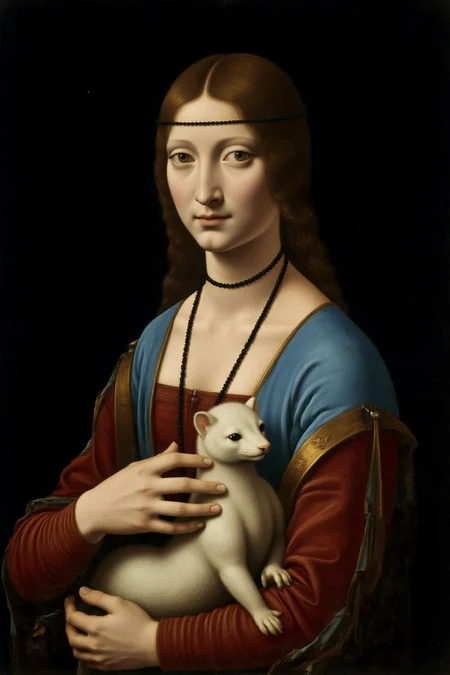
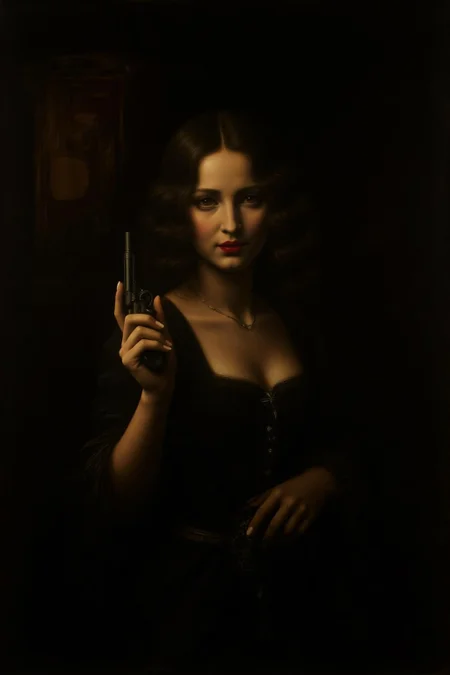
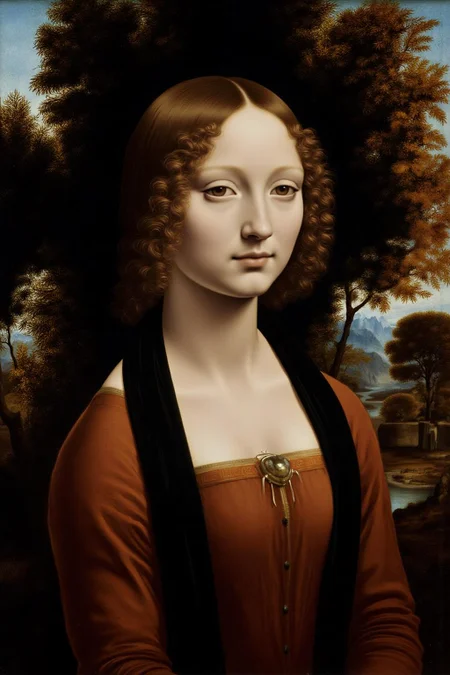
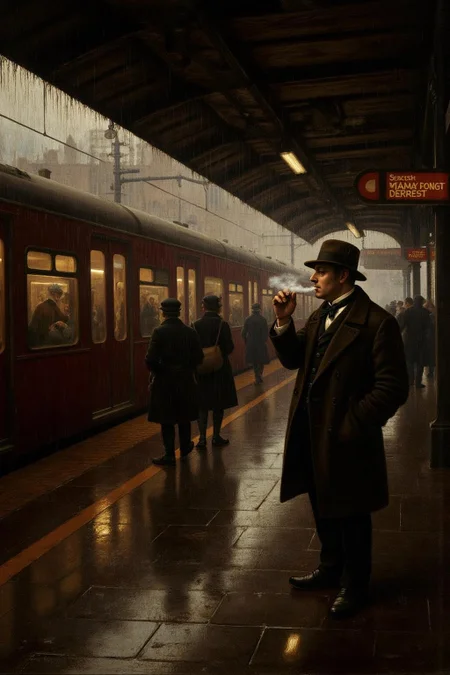
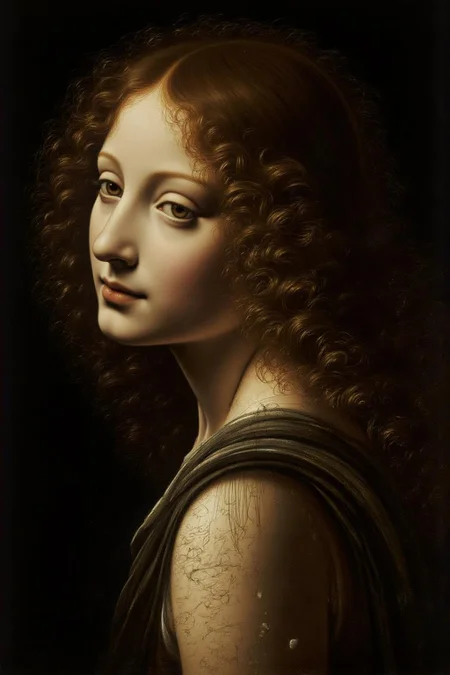
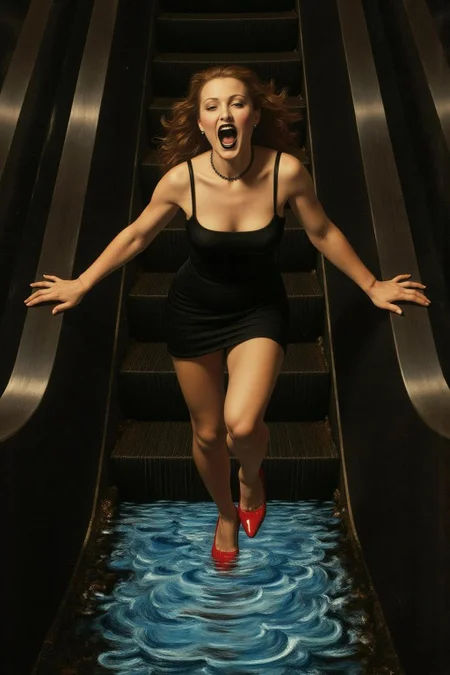
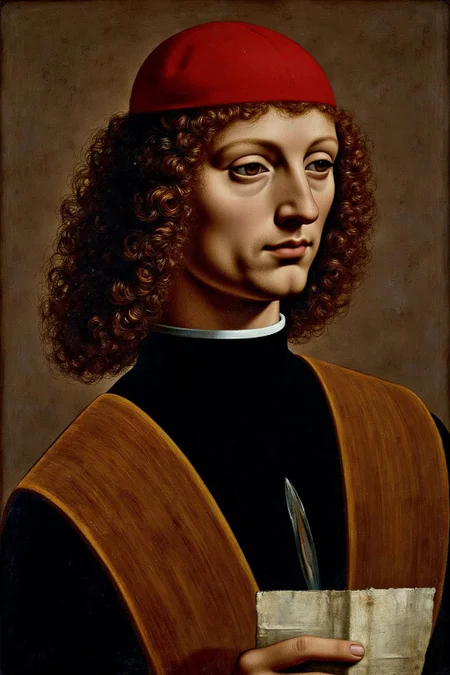
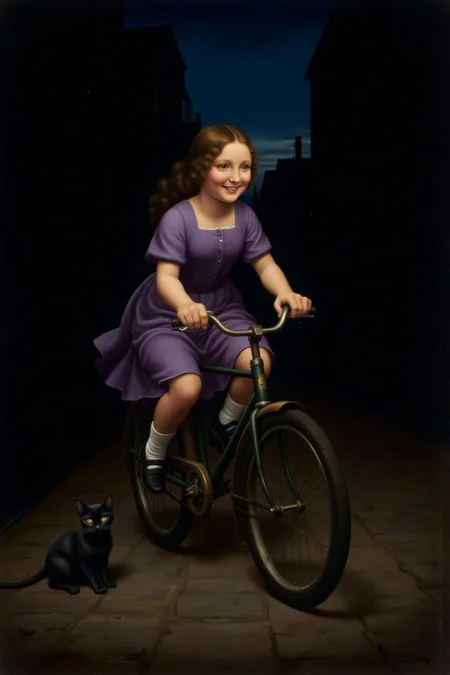
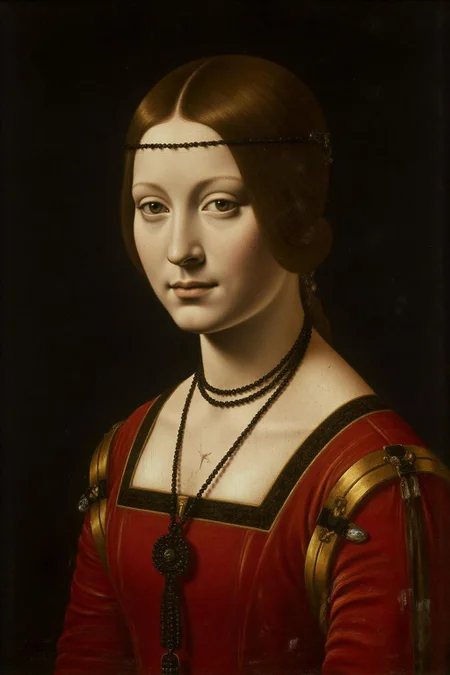
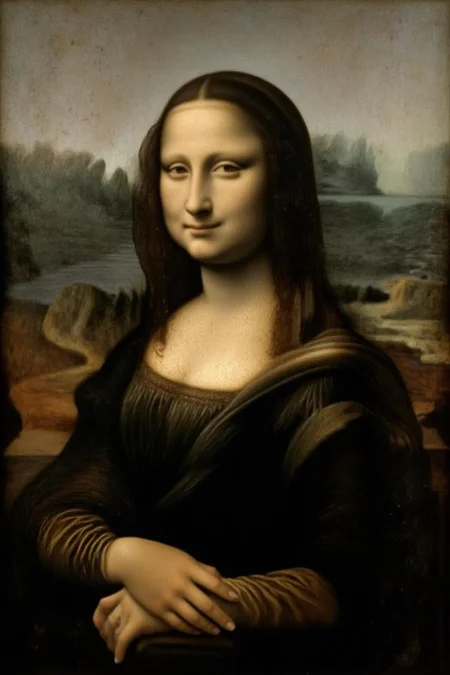
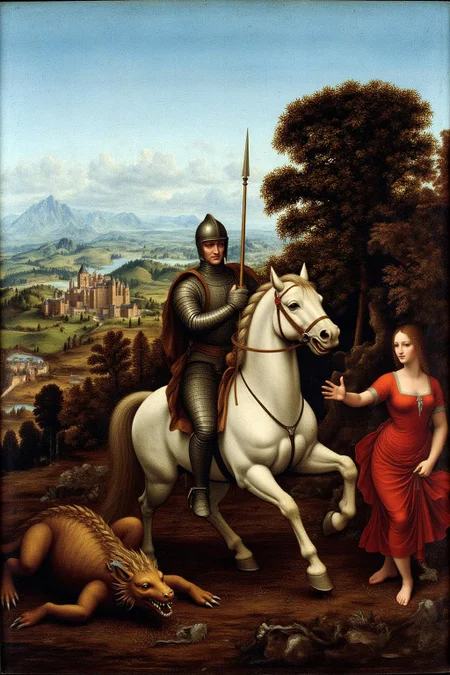
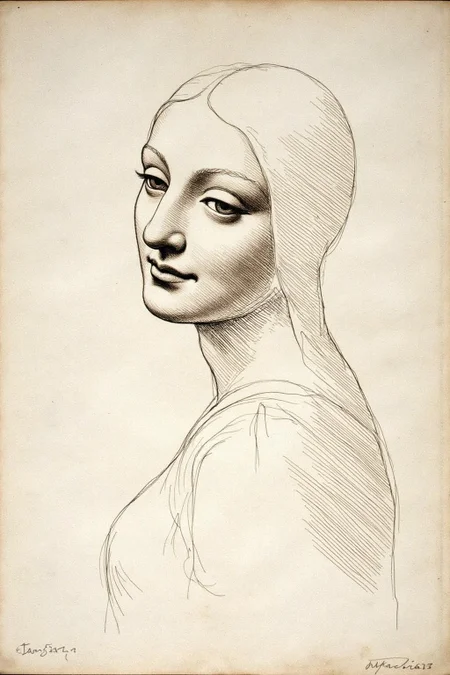
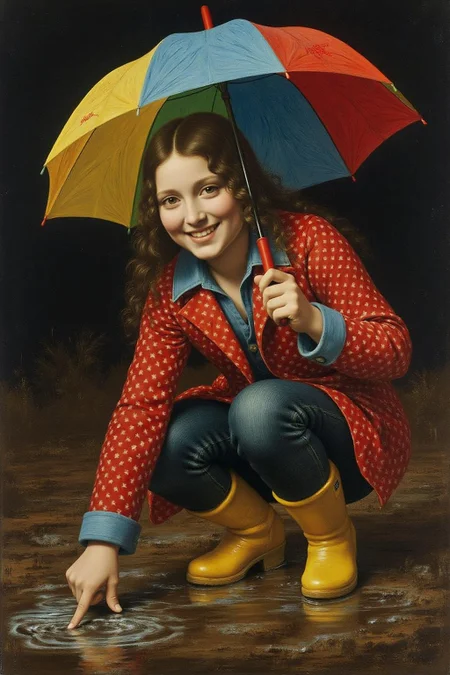
Trained on 12 paintings and 2 drawings by Leonardo di ser Piero da Vinci (15 April 1452 – 2 May 1519), who was an Italian polymath of the High Renaissance. He was active as a painter, draughtsman, engineer, scientist, theorist, sculptor, and architect.[3]. To see his works, please go to en.wikipedia.org/wiki/List_of_works_by_Leonardo_da_Vinci.
This is the 2nd of the series of LoRAs based on the works of the three titans of High Renaissance. Even thought da Vinci created arguably the most famous painting in the world, I am a bit surprised to find that his output is rather small. I guess he was too busy working on his many other projects 🤣.
From ChatGPT:
 This portrait attributed to Francesco Melzi, c. 1515–1518, is the only certain contemporary depiction of Leonardo.[1][2]
Leonardo da Vinci (15 April 1452 – 2 May 1519) is often considered the ultimate Renaissance man—an artist, scientist, engineer, architect, and visionary whose curiosity knew no bounds. His legacy reaches across centuries and disciplines, and his influence is woven into the fabric of both art and modern thought.
🎨 Leonardo da Vinci: A Portrait of Genius
🧠 Polymath of the Renaissance
Born in Vinci, Italy, Leonardo trained in the studio of Andrea del Verrocchio in Florence. While he began as a painter, he quickly expanded his focus to include:
Anatomy
Engineering
Astronomy
Botany
Hydraulics
Music
Architecture
Weapon design
He filled thousands of notebook pages with sketches, studies, and observations, often writing in a reversed "mirror script."
🖼️ As an Artist
Leonardo painted relatively few works, but nearly every one is iconic.
✨ Key Masterpieces
The Last Supper (1495–1498): A narrative masterpiece capturing human psychology and divine drama. Painted in Milan for the Convent of Santa Maria delle Grazie.
Mona Lisa (c. 1503–1506): Perhaps the most famous painting in history, known for her subtle smile, sfumato technique, and psychological depth.
Vitruvian Man (c. 1490): A drawing symbolizing the ideal proportions of the human body, blending art and science seamlessly.
Lady with an Ermine, Ginevra de' Benci, St. John the Baptist – all show Leonardo’s ability to portray humanity with mystery and grace.
🎨 Signature Techniques
Sfumato: A smoky, soft blending of tones and edges, giving figures lifelike volume and mystery.
Chiaroscuro: Contrasts of light and shadow for three-dimensional drama.
Scientific realism: His anatomical dissections informed how he painted the human body with unmatched accuracy and subtlety.
🔬 As a Scientist and Inventor
Leonardo envisioned:
Flying machines
Submarines
Armored tanks
Hydraulic pumps
Ideal cities
Though many of his designs were not realized in his lifetime, his notebooks (Codex Atlanticus, Codex Leicester, etc.) reveal a mind generations ahead.
🌟 Philosophy and Influence
He believed art and science were inseparable, each enriching the other.
He approached painting as a way to understand and reflect the universe—a divine system of beauty, proportion, and natural law.
🏛️ Legacy
Influence on Art: Raphael, Michelangelo, Caravaggio, and even modern artists have drawn from his innovations.
In Science: He prefigured discoveries in anatomy, hydraulics, flight, and optics.
In Popular Culture: From The Da Vinci Code to Assassin’s Creed, his mythos continues to captivate.
"Painting is a mental thing." – Leonardo da Vinci
Comparing Leonardo da Vinci, Michelangelo Buonarroti, and Raphael Sanzio reveals three towering figures of the High Renaissance, each with distinct styles, philosophies, and legacies. Though contemporaries (with some rivalry), they shaped Western art in complementary and contrasting ways.
🎨 Leonardo vs. Michelangelo vs. Raphael
A comparison of the Big Three of the High Renaissance
Leonardo da Vinci (1452)
Michelangelo (1475)
Buonarroti vs Raphael Sanzio (1483)
Main Mediums
Painting, drawing, science, engineering
Sculpture, painting, architecture
Painting, architecture
Philosophy of Art
Art as science and observation
Art as divine struggle and ideal form
Art as harmony, grace, and clarity
Famous Works
Mona Lisa, The Last Supper, Vitruvian Man
David, The Sistine Chapel Ceiling, Pietà
The School of Athens, Sistine Madonna, Portraits
Style
Sfumato, psychological depth, anatomical realism
Powerful figures, dynamic poses, muscular tension
Balanced composition, elegance, serenity
Personality
Curious, enigmatic, private
Intense, proud, reclusive
Diplomatic, charming, well-liked
View of the Human Body
Scientific and intellectual
Monumental, heroic, almost godlike
Idealized but human, gentle and beautiful
Use of Space and Light
Subtle gradation, atmospheric
Sharp contrast, sculptural form
Clear perspective, soft lighting
Influence
Science + art integration; inspired Realism, Symbolism
Deep influence on Mannerism, Baroque sculpture
Shaped ideals of beauty and order in Classical tradition
🔍 Key Differences
🧠 Leonardo
Prioritized knowledge, anatomy, and natural observation.
His figures seem to think and feel, filled with mystery.
Art was a scientific inquiry, less about spectacle, more about essence.
💪 Michelangelo
Embodied the divine power of creation—his art feels titanic, as if carved from raw spirit.
Obsessed with the male nude, the body as a sacred machine.
Saw sculpture as the highest form of art; painting came second.
💫 Raphael
The great synthesizer—blended Leonardo’s grace with Michelangelo’s drama.
His frescoes (especially The School of Athens) are masterclasses in harmony and order.
Idealized beauty, perfect proportion, and gentle emotion.
🏛️ Legacy in Brief
Leonardo is the visionary, the mind ahead of his time—his art and notebooks remain symbols of Renaissance curiosity.
Michelangelo is the hero, shaping marble and ceiling frescoes into acts of divine force.
Raphael is the harmonizer, whose balance and serenity shaped generations of classical painting.
Would you like a visual infographic, a timeline of their overlapping lives, or a deeper dive into how their relationships (and rivalries) played out?
This is where the history gets juicy. The dynamics between Leonardo da Vinci, Michelangelo, and Raphael weren’t just about style—they involved ego, admiration, rivalry, and politics, all playing out in the powerful world of Renaissance Florence and Rome.
🎭 Leonardo, Michelangelo & Raphael: Genius, Rivalry, and Renaissance Drama
🎨 Leonardo vs. Michelangelo
A famous rivalry of contrasts.
Age gap: Leonardo was 23 years older. By the time Michelangelo came of age, Leonardo was already a revered master.
Temperaments: Leonardo is refined, enigmatic, stylish (known for his elegant dress and calm presence). Michelangelo is intense, blunt, devout, emotionally volatile.
🔥 The Flashpoint
In 1504, both were commissioned to paint battle scenes on opposite walls of the Florentine Palazzo Vecchio—Leonardo’s Battle of Anghiari and Michelangelo’s Battle of Cascina.
This was meant to be a clash of titans, but both works were left unfinished.
Michelangelo criticized Leonardo for not completing works and using experimental methods that failed.
Leonardo reportedly mocked Michelangelo in public about his preference for muscular men and “awkward” nudes.
Michelangelo retaliated with sharp wit and contempt, reportedly calling Leonardo a “coward” in the streets.
This mutual disdain fueled each other’s brilliance, though Michelangelo always seemed more bitter.
🎨 Michelangelo vs. Raphael
Respect tinged with rivalry.
Raphael arrived in Rome in 1508, just as Michelangelo was working on the Sistine Chapel ceiling.
Raphael admired Michelangelo deeply—and it shows in the muscularity and dynamism of his later works.
But Michelangelo saw Raphael as a social climber, favored by Pope Julius II and Cardinal Bibbiena.
Raphael had the charm, diplomacy, and court connections that Michelangelo lacked.
🖼 The Sistine Influence
Raphael secretly saw the Sistine ceiling while it was in progress, and its monumental energy shifted his style. Michelangelo, in turn, grew furious, believing Raphael “stole” his ideas.
In Raphael’s The School of Athens, he even painted Michelangelo’s likeness into the figure of Heraclitus—a nod of respect, and perhaps a subtle jab.
🎨 Leonardo and Raphael
More admiration than rivalry.
Raphael deeply studied Leonardo’s technique, especially sfumato and psychological expression.
His portraits (like La Fornarina and Baldassare Castiglione) echo Leonardo’s quiet intensity.
Though they likely never had a direct working relationship, Leonardo’s legacy clearly shaped Raphael’s pursuit of idealized beauty and emotional subtlety.
🏛️ The Roman Stage
All three were summoned to Rome, and the Vatican became the epicenter of this artistic gladiator match.
Pope Julius II and Leo X pitted them (directly or indirectly) against each other in architectural and decorative commissions.
While Leonardo left Rome disillusioned, and Michelangelo grew increasingly isolated, Raphael became the darling of the court—until his sudden death at age 37.
🔚 Ego, Envy & Eternal Influence
This rivalry wasn’t about who was better—it was about how each defined the very nature of art:
Leonardo saw it as knowledge and mystery.
Michelangelo saw it as divine labor and expression.
Raphael saw it as balance and grace.
Their tensions—and mutual inspirations—created a golden age of art whose echoes still shape how we see genius today.
Description
This is epoch 10. Earlier epochs can be downloaded from tensor.art/models/852059703994233101/Leonardo-da-Vinci-P1-CapD6Cos5-2025-04-08-03:57:50-Ep-10
FLUX.1 - dev-fp8
Trigger: davinci1 painting
Repeat: 20 Epoch: 8 (Trained on 14 512x512 images for 2240 total steps)
Then trained for another 2 epochs for 2800 total steps
Unet LR: 0.0005 Scheduler: cosine Optimizer: AdamW
Network Dim: 6 Alpha: 3
Epoch Loss
1 0.354
2 0.342
3 0.339
4 0.332
5 0.322
6 0.309
7 0.315
8 0.312
Prompt: davinci1 painting. A woman and a black bear sitting in a park for a picnic
9 0.307
10 0.304<-lowest