
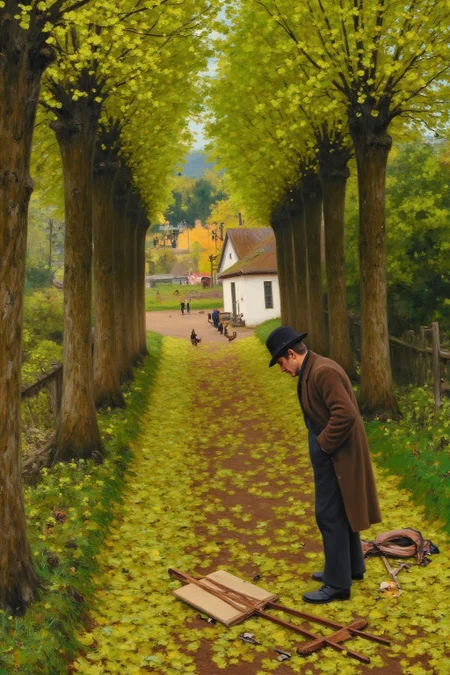

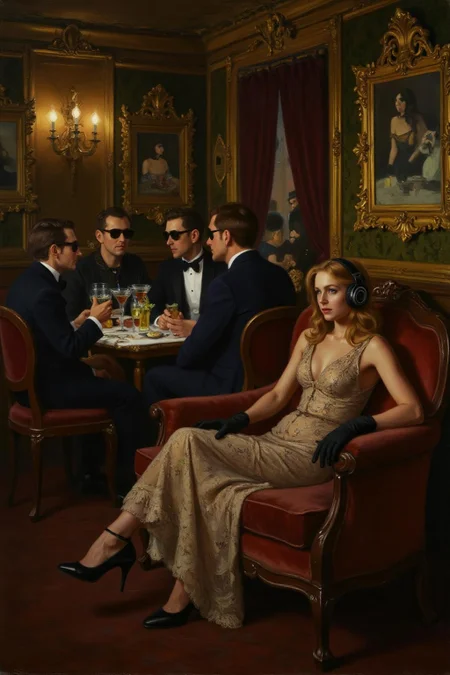

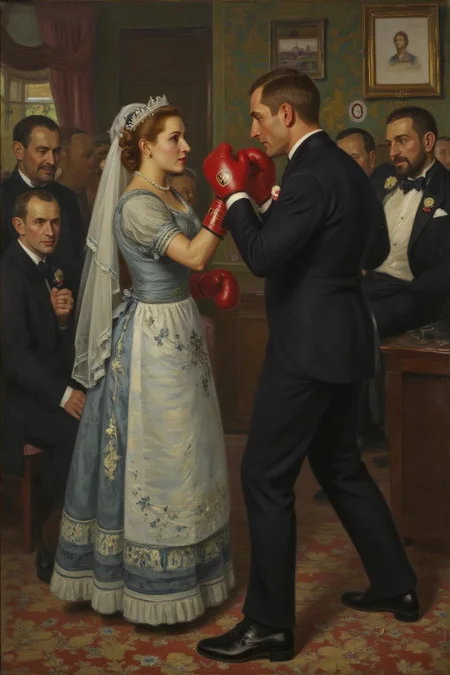


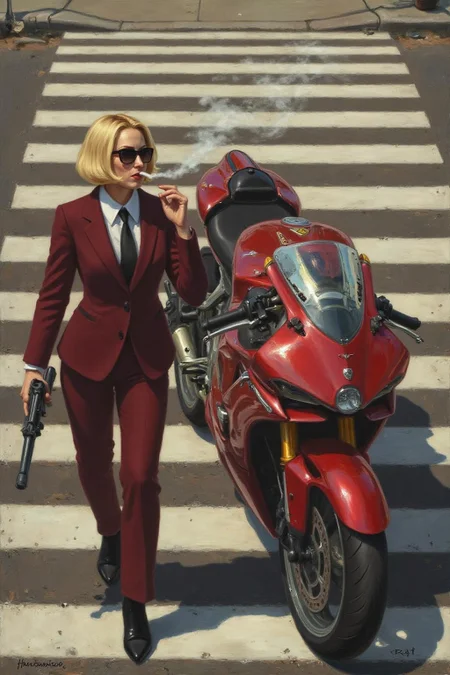
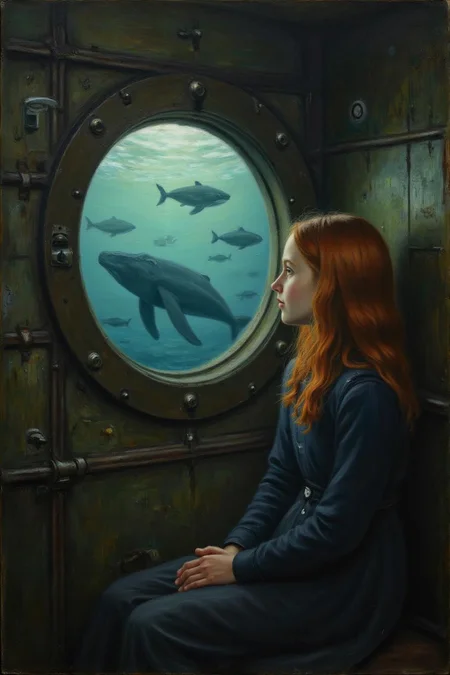

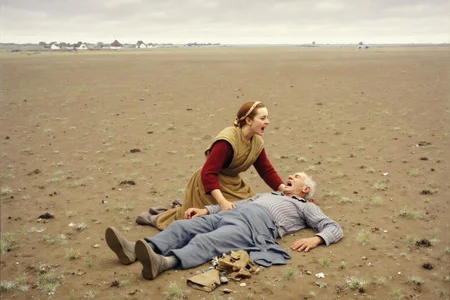
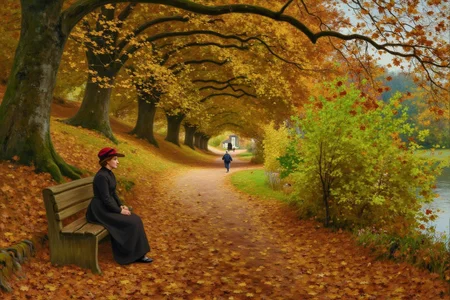


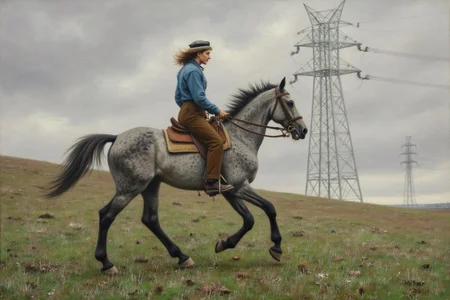
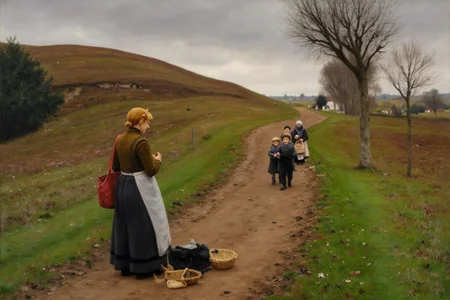

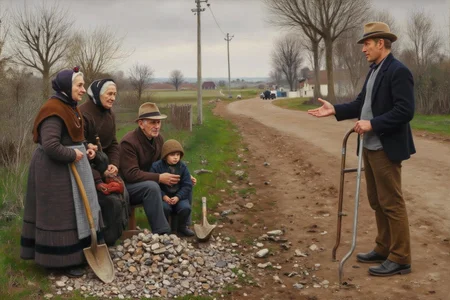
Trained on 24 oil paintings by the Danish artist Hans Andersen Brendekilde (born Hans Andersen, April 7, 1857, Brændekilde, Odense Municipality ; died, March 30, 1942, Jyllinge). To see his works, please go to
tuttartpitturasculturapoesiamusica.com/2019/04/Hans-Andersen-Brendekilde.html
tuttartpitturasculturapoesiamusica.com/2024/03/brendekilde-munch-the-scream.html
Usage Tip: try lowering the Guidance from the default 3.5 to 2.0 for a more "painterly" texture.
The title "Danish Scream" is a reference to his 1889 monumental painting Udslidt (Worn Out),
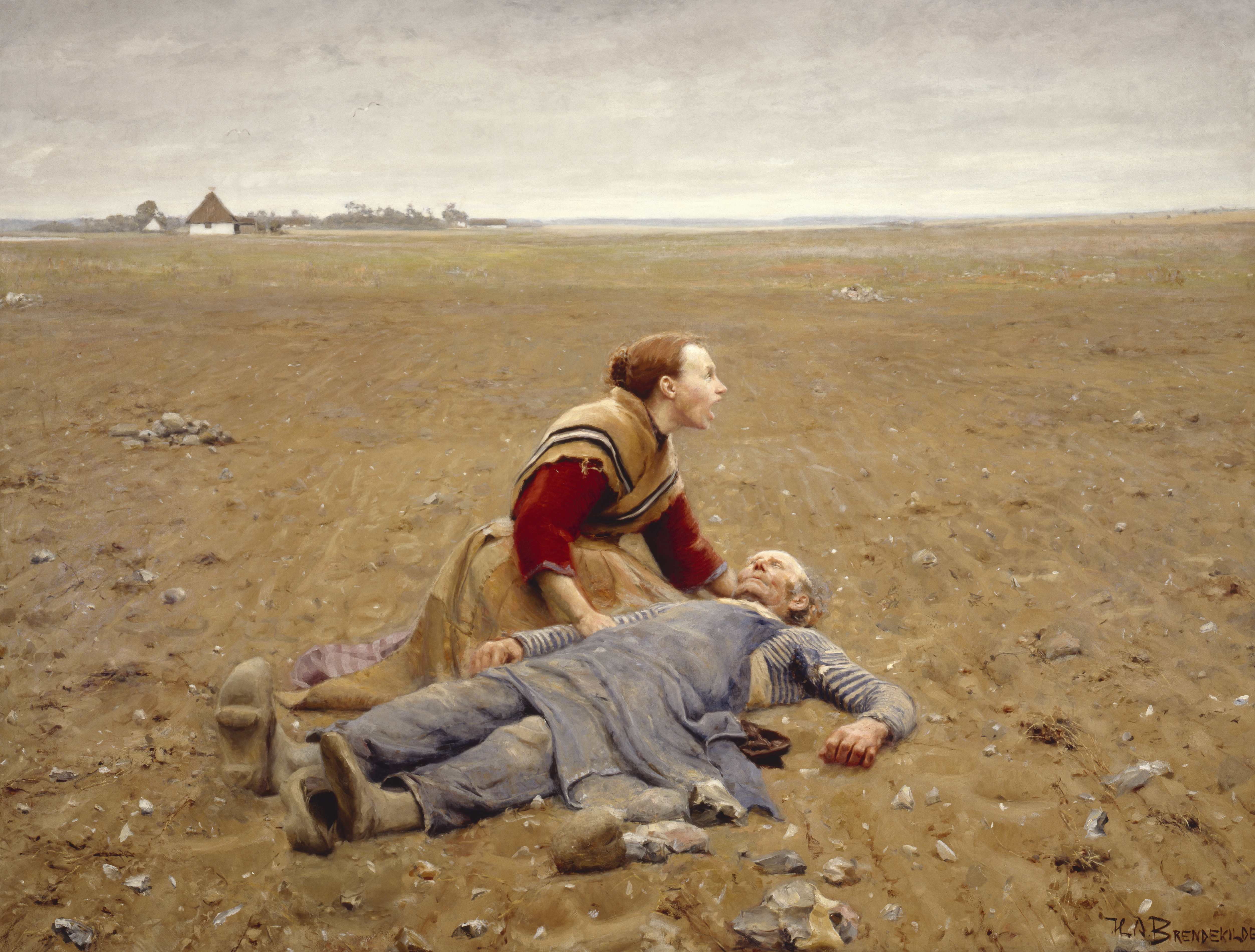 which according to wikipedia, may have inspired or at least influence Munch's more famous The Scream

From ChatGPT:
Hans Andersen Brendekilde (1857–1942) was a Danish painter whose career spanned from intense Social Realism to poetic, Symbolist-tinged pastoral scenes. Born Hans Andersen in the rural village of Brændekilde on the island of Funen. In 1881, he and his friend, the painter Laurits Andersen from a village named Ring in southern Zealand, decided to change their last names, taking the names of their native villages, in order to avoid confusion at their joint exhibition. Hans Andersen became H. A. Brendekilde, and his friend Hans became L. A. Ring.
🌾 Early Life and Background
Brendekilde came from a poor family and began as a woodcarver before studying at the Royal Danish Academy of Fine Arts in Copenhagen.
His rural upbringing deeply informed his subject matter; he understood the hardships of the Danish peasantry from firsthand experience.
🎨 Artistic Career & Themes
🧱 Social Realism (1880s–1890s)
Brendekilde’s early work is emotionally direct and politically charged, drawing attention to the lives of rural laborers, often through a deeply empathetic lens.
Signature Work: Udslidt (Worn Out, 1889)
This painting became a cultural touchstone in Denmark. It shows a man who collapses from exhaustion in a field while his wife wails in despair. The stark realism and emotional power of the image made it one of the earliest and most powerful works of Social Realism in Danish art.These works place him alongside contemporaries like L.A. Ring and Theodor Philipsen, but Brendekilde’s approach was more viscerally emotional.
🌼 Transition to Symbolism and Pastoral Themes
In the 20th century, Brendekilde’s palette brightened and his subjects shifted toward serenity—children playing, women gathering flowers, quiet domestic interiors.
His later paintings often focus on innocence, beauty in simplicity, and spiritual harmony with nature.
Gardens, flowers, and peaceful village scenes dominate—somewhat akin to Carl Larsson’s or Peder Mønsted’s idealized rural moments.
🧑🎨 Style and Technique
Realist Draftsmanship: His figures are solid and tangible, painted with a sculptor’s eye for form and gesture.
Symbolic Undertones: Even in his calmest scenes, motifs like flowers, birds, and light evoke larger emotional or spiritual meanings.
Dual Sensibility: Brendekilde merges the grit of reality with the beauty of idealism, often in the same composition.
🌍 Legacy and Recognition
His works were widely exhibited in Europe and the U.S., including at the World’s Columbian Exposition in Chicago (1893).
While Udslidt is his most famous work in Denmark, his softer later works have become more widely appreciated in recent years.
Though once overshadowed by peers like L.A. Ring, Brendekilde is now seen as a bridge between the moral force of realism and the emotional resonance of romanticism.
Known for his emotionally powerful and socially conscious realist works, which later evolved into more idyllic and symbolist-inflected pieces. His style sits at the intersection of Naturalism, Social Realism, and Romantic Symbolism, depending on the period of his career.
🎨 Early Style: Social Realism and Empathy
Themes: In his early work, Brendekilde focused on rural hardship, working-class life, and social inequality—often with a deep humanistic tone.
Signature Work: “Udslidt” (“Worn Out,” 1889) remains one of his most striking paintings—depicting a peasant collapsing from exhaustion, his wife screaming in anguish. It's a harrowing image of labor, grief, and systemic neglect.
Visual Traits:
Earth-toned palettes
Strong, grounded compositions
Expressive facial and bodily gestures
Attention to textures—weathered hands, soil, rough clothing
He aligned briefly with the “Skagen painters”, but focused more on the emotional reality of the poor rather than capturing sunlight and leisure.
🌿 Later Style: Idyllic Symbolism and Nature Worship
In the early 20th century, his art softened—turning toward pastoral scenes, children in nature, and idealized rural life.
These works feature:
Lush gardens and meadows
Playful or contemplative children
Light symbolism (lilies, flowers, doves)
Brighter, more harmonious color palettes
Though more romantic, they often carry an undercurrent of quiet spiritualism, evoking a deeper connection between people and the land.
🧭 Stylistic Summary
Aesthetic Duality: Brendekilde’s work spans both the raw intensity of rural struggle and the serenity of a pastoral ideal.
Realist Roots, Symbolist Overtones: Even in his most romantic pieces, there’s often a symbolic dimension—sometimes religious, sometimes existential.
Emotional Directness: Whether painting grief or innocence, his figures feel emotionally real and physically present.
Would you like a comparison between him and other Danish or Nordic painters like L.A. Ring or Carl Larsson?
Description
This is epoch 11. Other epochs can be downloaded from tensor.art/models/855386973282559171/Hans-Andersen-Brendekilde-CD85-2025-04-20-22:52:39-Ep-13
FLUX.1 - dev-fp8
Trigger: hansandersenbrendekilde1 painting
Repeat: 20 Epoch: 7 (Trained on 24 512x512 image for 3360 total steps)
Then for another 6 epochs for 6240 total steps
Unet LR: 0.0005 LR Scheduler: cosine Optimizer: AdamW
Network Dim: 8 Alpha: 4
Epoch Loss
1 0.403
2 0.401
3 0.386
4 0.377
5 0.366
6 0.359
7 0.351
hansandersenbrendekilde1 painting. Close up of a young woman, whose face is covered in pink bubble gum, sitting on the right in a diner in 1953. She has should length hair held with red Alice band. The diner has red booths and is full of people lauging and eating.
8 0.364
9 0.347
10 0.338
11 0.328
hansandersenbrendekilde1 painting. A man, a woman, and a bear are dancing in the rain
12 0.344
13 0.314<-lowest
FAQ
Details
Available On (1 platform)
Same model published on other platforms. May have additional downloads or version variants.