
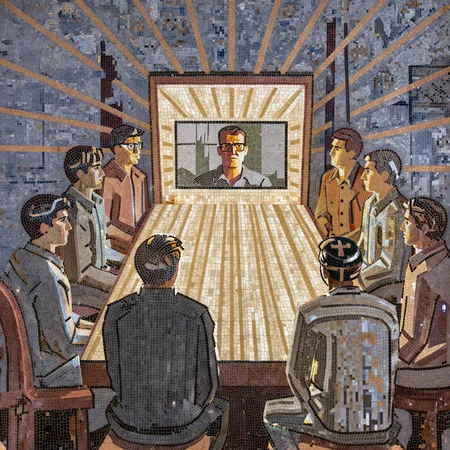


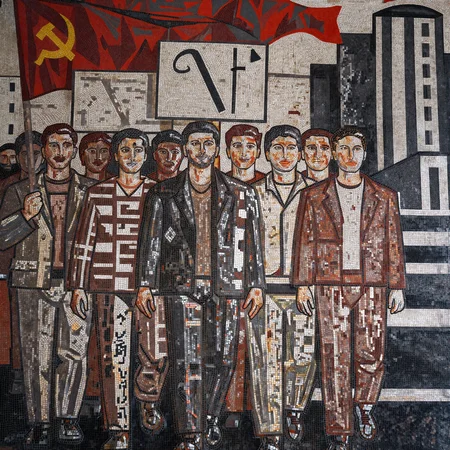
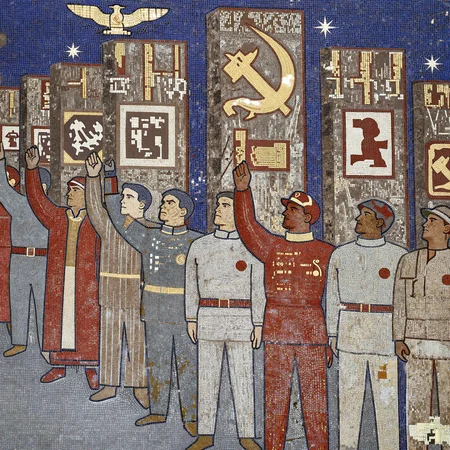
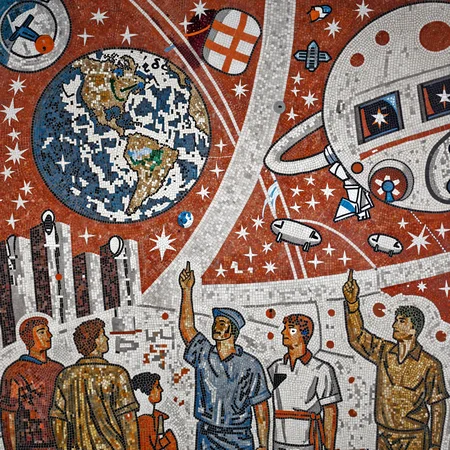
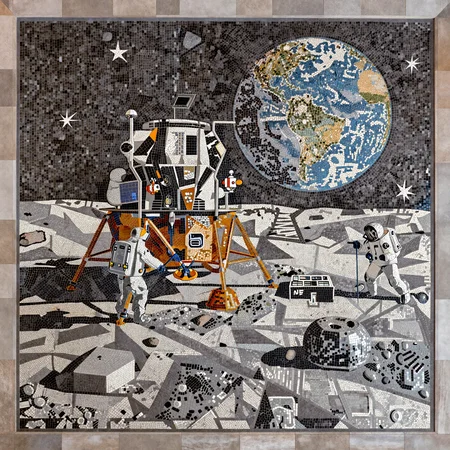
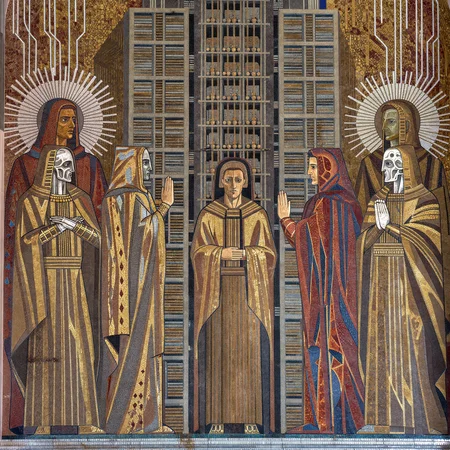
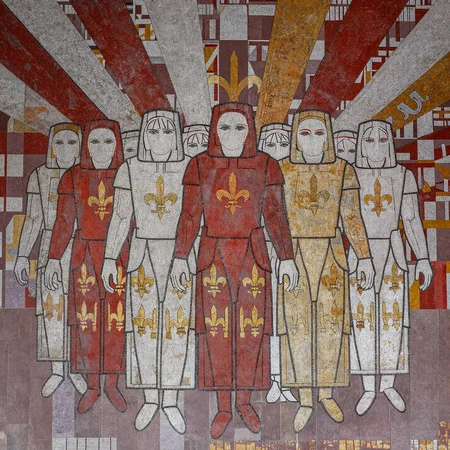
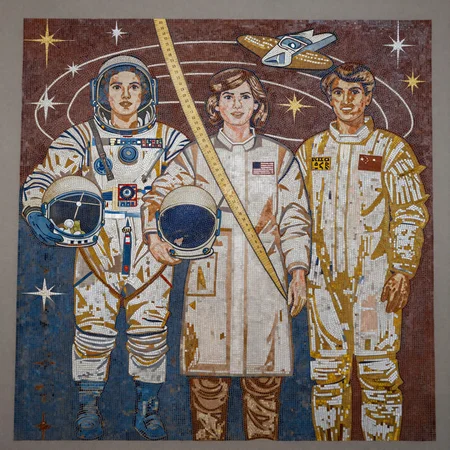
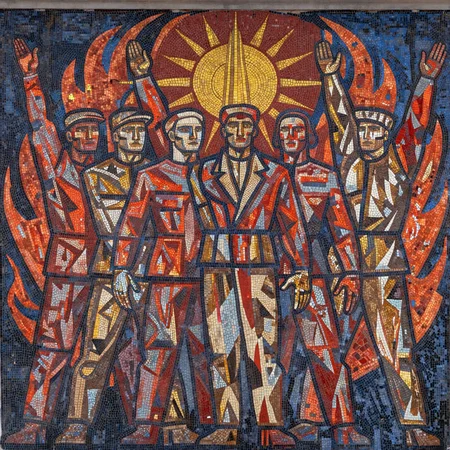

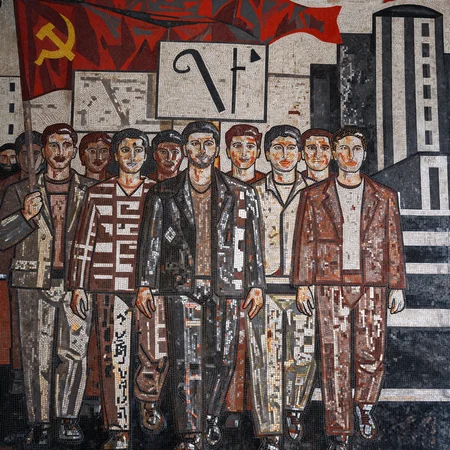
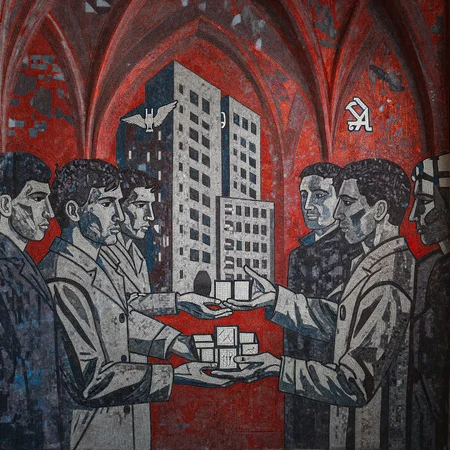
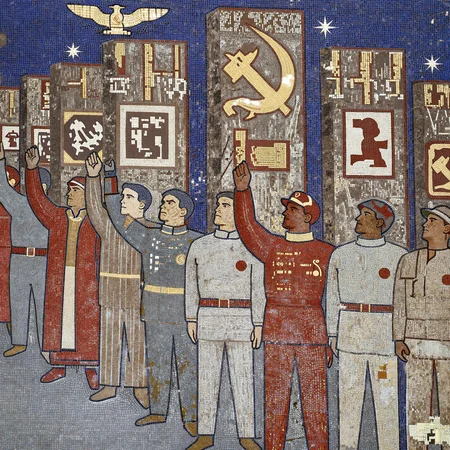
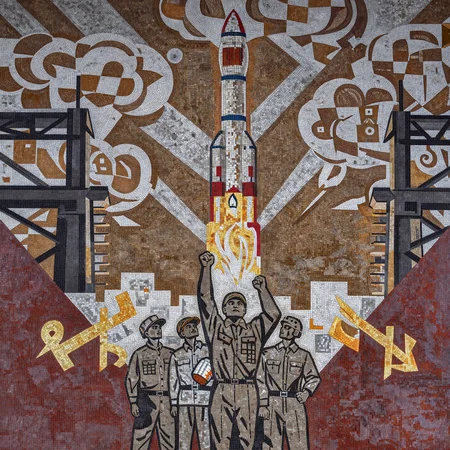
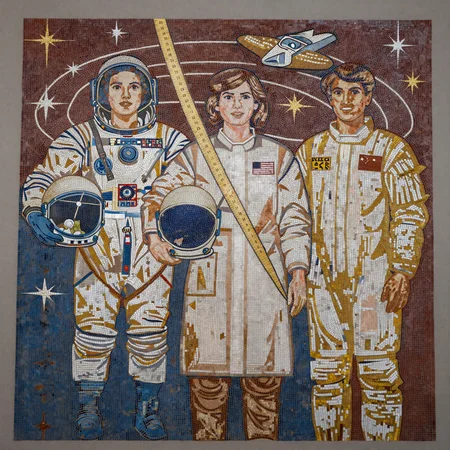
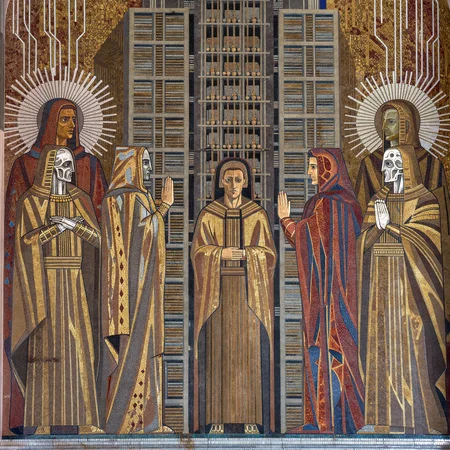
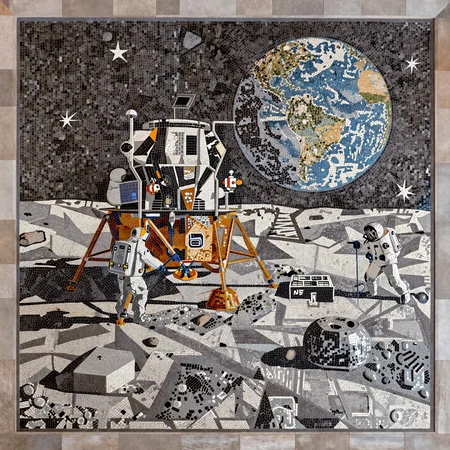
Soviet mosaics were a widespread form of public art used to beautify buildings and spread communist ideology from the 1930s to the 1980s, featuring durable materials like glass (smalti) in vibrant scenes of labor, science, local culture, and utopian visions, often integrated into architecture with significant budget allocations, yet varying from pure propaganda to subtle blends with national traditions.