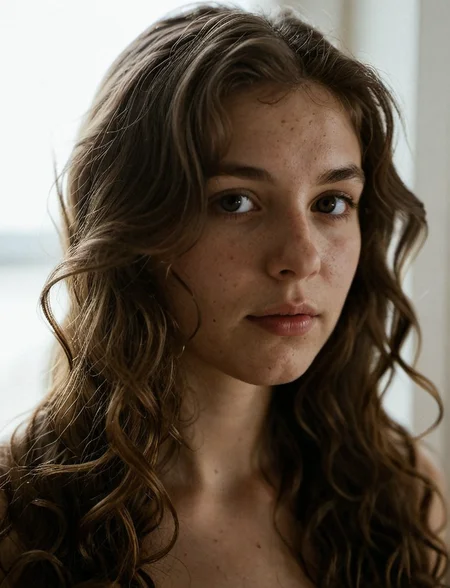

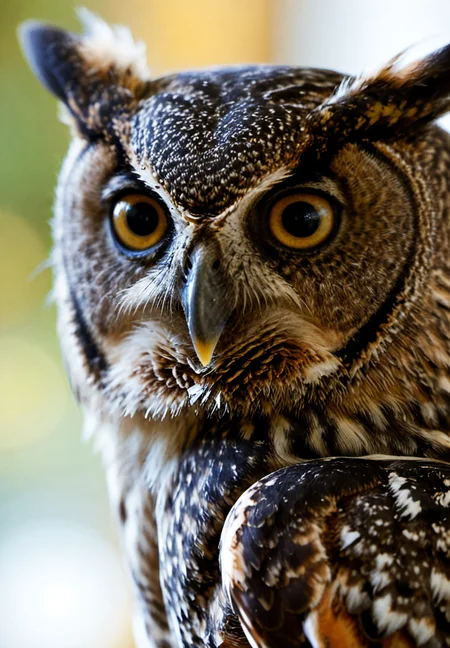



JRD_RenderSpec XL is a next‑generation photorealistic SDXL merge engineered for creators who demand precision, stability, and uncompromising visual fidelity.
Built through a carefully balanced multi‑model fusion, it delivers a clean, controlled realism that adapts effortlessly to portraits, full‑body compositions, animals, food, objects, and complex environments — without imposing a fixed style or introducing unwanted artifacts.
This model was designed with a single guiding principle:
realism should feel natural, not forced.
Every component of the merge was tuned to preserve authentic skin texture, maintain stable anatomy, and render fine details with clarity that feels photographic rather than synthetic. Whether you’re generating a close‑up portrait, a dynamic outdoor scene, or a highly detailed still life, JRD_RenderSpec XL responds with consistency and reliability.
Where many photorealistic models excel only in narrow domains, JRD_RenderSpec XL stands out for its exceptional generalization. It handles human subjects with the same confidence it brings to animals, landscapes, food, and materials. The model understands light, color, and texture in a way that produces images that are both technically sharp and visually believable.
⚙️ Recommended Scheduler
The model performs at its best with:
DPM++ 2M SDE Karras
This scheduler is ideal because it:
• preserves micro‑detail without oversharpening
• handles skin, fabrics, materials, and surfaces with precision
• avoids artifacts in darker areas
• produces stable eyes even in full‑body compositions
It also works well with:
• DPM++ 3M SDE (softer, more cinematic rendering)
• Euler a (higher contrast, more punchy results)
🔢 Recommended Steps
• 34 steps → the sweet spot
• 30–40 → optimal range
• 50+ → only useful for macro‑textures or highly complex materials
🎚️ CFG Scale
• 6.0 → perfect balance
• 5.5 → softer, more natural look
• 6.5 → more definition and stronger presence
• avoid 7+ → risk of overly harsh skin texture
Its internal architecture is optimized for SDE‑based schedulers, with DPM++ 2M SDE Karras emerging as the ideal pairing. This combination unlocks the model’s full potential: crisp micro‑detail, stable eyes, smooth gradients, and a natural balance between sharpness and softness. Even in challenging lighting — neon, backlight, overcast, rim light — the model maintains coherence without drifting into noise or overprocessing.
JRD_RenderSpec XL is not a stylistic model.
It is a precision tool.
It gives you control, flexibility, and a neutral foundation that can be pushed toward cinematic, editorial, documentary, or lifestyle aesthetics depending on your prompt. It does not fight you; it follows your direction.
Whether you’re a professional creator, a prompt engineer, or a hobbyist looking for a reliable all‑rounder, JRD_RenderSpec XL is built to be your go‑to photorealistic engine — stable, versatile, and ready for any subject you throw at it.
Description
JRD_RenderSpec XL_TURBO — LCM‑Optimized Version
JRD_RenderSpec XL_TURBO is the LCM‑optimized (Latent Consistency Model) edition of the original JRD_RenderSpec XL.
This version is designed for extreme speed, minimal VRAM usage, and high visual consistency, even when running with very low step counts.
⚡ Performance
• 16 steps
• CFG 1.5
• extremely fast generation
• ideal for rapid workflows, previews, concepting, and high‑speed production
On an 8 GB GPU, it generates images in 2–3 seconds.
This makes it perfectly suitable even for users with 4 GB of VRAM, laptops, or entry‑level hardware.
🔧 Important Technical Note
This is an LCM‑based model, meaning it uses a distilled diffusion dynamic optimized for speed and stability with very few steps.
Due to the inherent nature of LCM distillation:
• it cannot and will never perfectly match
the full fidelity achievable with advanced samplers such as
DPM++ 2M SDE, DPM++ 3M SDE, SDE Karras, etc.
Those samplers follow far richer noise trajectories, preserve micro‑details, and maintain complex textures that an LCM—by design—simplifies to achieve speed.
🎯 What this means in practice
• the Turbo version preserves the style and identity of the base model
• but prioritizes speed and accessibility
• sacrificing a small amount of fine detail compared to SDE samplers
This is an intentional trade‑off, not a flaw.
💾 Who This Version Is For
• users with 4–8 GB VRAM
• laptop and low‑VRAM setups
• anyone who needs fast generation
• creators who want the base model’s look with a fraction of the compute cost
If you want maximum possible fidelity, use the original model with SDE samplers.
If you want speed + very similar results, the Turbo version is the ideal choice.
FAQ
Comments (2)
there are those who give the thumbs down and then delete the account, losers
Great clarity and realism, keep up the excellent work, my friend.
Details
Files
Available On (2 platforms)
Same model published on other platforms. May have additional downloads or version variants.