
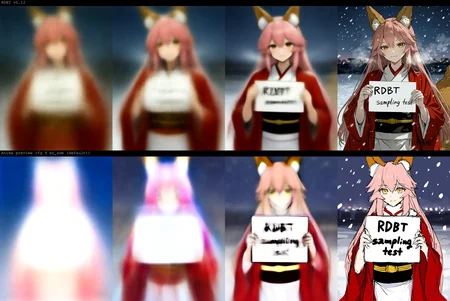







(9/26/2026): Distilled ckpt will not be updated. Use the new standalone acc LoRA here. After v2.4. All versions will be the "base" version (not distilled).
Update log and version info: link.
RDBT [Anima]
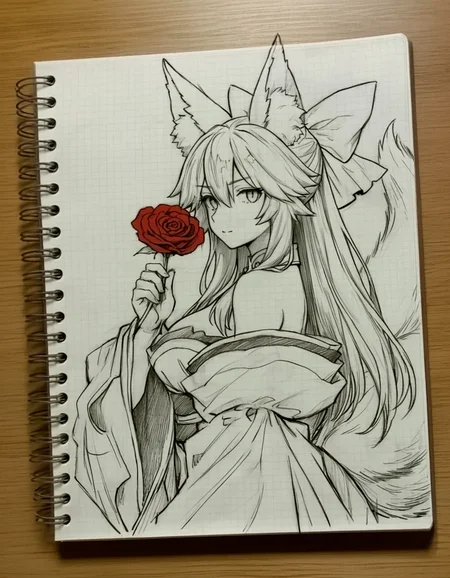
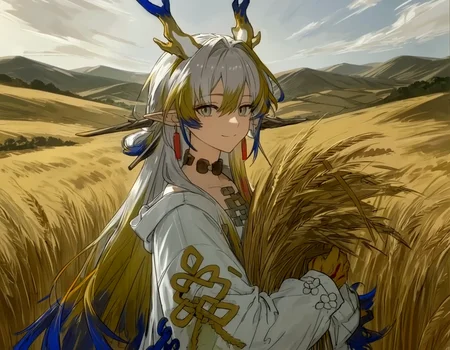
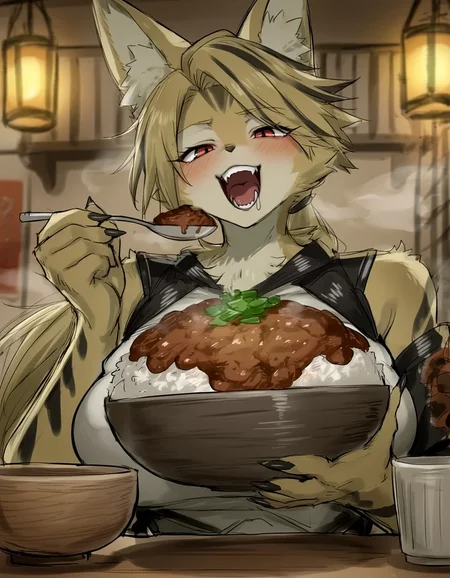
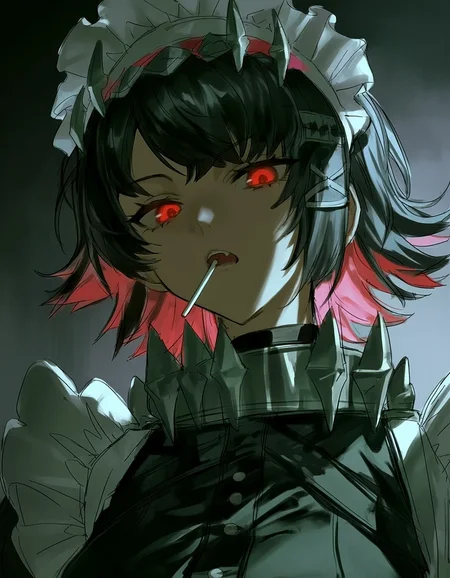
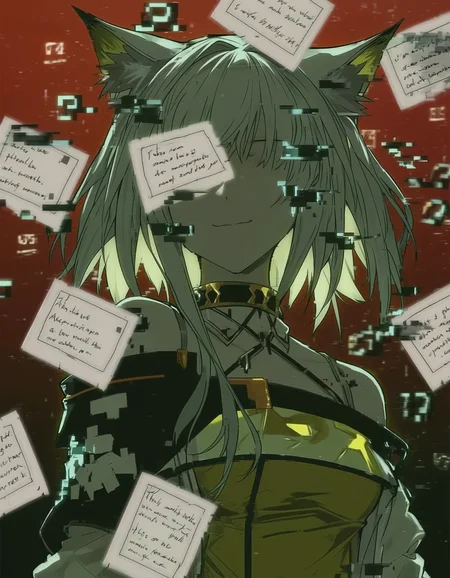
A general finetuned base mode. Gives you the quality as it should be. From wallpaper level digital art, to 5-min sketch.
Dataset contains ~10k images, handpicked by professional amateur artists, captioned by LLM. The criteria for evaluation are not visual appeal, but the painting technique and the level of completion.
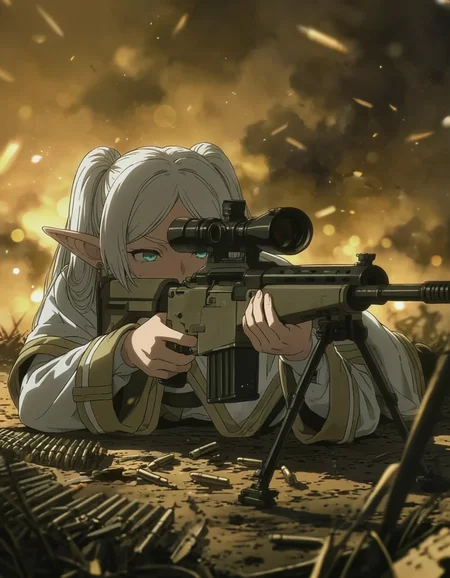
Some cover images look ridiculous; they're just for demonstration purposes for corner cases.
Useful links:
RDBT | Digital Art: Beginner friendly 16-step ckpt. Optimized for digital art style.
RDBT | Original LoRA: If you're an advanced user and want to minmaxing everything.
16-step Acc LoRA: Style friendly, less AI slop, compared to the official Turbo.
Usage:
Settings:
Base version: CFG 4 and steps 24+.
Distilled version (8s, 16s, discontinued): CFG: 1. Steps: 8 or 16.
Prompt:
Always specify @style in prompt, or use a style LoRA. Otherwise, you will get random/mixed style.
Unlike most finetuned models out there. This model does not have overfitted default style. Because the dataset is big enough. It's a feature not a bug (see below FAQs).
Quality tags:
You don't need quality tags. The fine-tuning dataset has higher quality than "masterpiece". Thus quality tags don't have effects. Omitting those redundant tokens allows LLM to pay more attention on other words.
FAQs:
Why doesn't this model have a default style?
If a model has a "default" style (ignores prompt and is always active). We call it "overfitted". Technically, "default" style is not a feature, it's a bug. This means the training dataset is not big enough, and the model has lost its ability to generate other styles.
The goal of RDBT model is to reproduce styles, not one style, but every style, as accurate as possible. As some of you know, I use this model to aid in drawing. I need unique textures and details, instead of uniformed 2.5D AI slop style.
You decide what style you want, not me.
RDBT can't remove nor resist overwhelming Al slop effects
Too long, see: link.
Sharing merges using this model is not allowed.
This mode is a free and it will always be free. This "restriction" won't affect anyone. It's only aimed at those who steal others' models to sell.
Known model thieves: NukeA.I (selling this model behind paywall on tensorart).
Because he is such a jerk I wrote a story about it. Also contains a guide for trainers about "how to bake special trigger word into your model".
Description
FAQ
Comments (30)
nice smoll model :O
Please can you do a full BF16 checkpoint as your work is incredible. Well done.
no need. 32 rank LoRA is enough to learn all the things.
@reakaakasky oh okay do you mean the v0.12fd Lora?
yes.
I also uploaded fp16 full ckpt.
Шикарно , молодец!!!
So what are the difference between FP8 and FP16? Can you elaborate?
This is an oversimplification but FP8 has half the precision of FP16 so its faster at the cost of lower output quality. In practice there isn't too much quality difference, though.
@Unhing3d Other than quality and speed differences, does it impact prompt adherence?
There is no quality difference.
Slight output difference = numerical fluctuation != quality degradation
There will be slight differences between FP8 and FP16 outputs.
These are simply numerical fluctuations. Different calculation methods have numerical fluctuations, and different graphics cards too.
In practice, people won't notice any quality degradation in fp8. Even if people use numerical values to quantify it (aka perplexity), it is still very small and almost unmeasurable.
e.g. fp8 vs bf16, z-image, if you can't tell which one is which, then no quality degradation, they are the same.
I don't know what has really changed or what's the big difference with the new version but I have noticed an improvement in lots of styles.
You should try this model with "Z-image power nodes" namely the "style string injector" which gives you guidance at the start of the prompt of what kind of image you want to create. You'd be surprised how well this small model does realism as well.
For example illustration:
YOUR CONTEXT:
You are a digital artist working in a dystopian, technologically advanced future.
Your illustration is a Cyberpunk Noir scene, characterized by harsh, dramatic lighting that casts long, sharp shadows, reflecting the grimy underbelly of a futuristic scene. It employs a limited color palette dominated by deep blues, neon greens, and stark oranges, giving a mysterious aesthetic.
YOUR ILLUSTRATION: <prompt>
would you share a workflow for that? my injector node does nothing
@rox56 seem to be just some bot
it goes in diffusion_models
@vdf433 ok thx a lot
@OtakuStorm_Ai and diffusion models only hold the weights, you need the qwen_image_vae.safetensors the text encoder qwen_3_06b_base.safetensors models and their loader nodes in comfy workflow i.e. this is not a "checkpoint" which would hold all within the one file.
As someone who only does Anime/2.5d, this is single-handedly the biggest development in the self-hosted imagen space since illustrious/NAI. Maybe since pony. This is currently the only model, even in its early stages where I am more than happy to trade IT/s for the multitude of options one has of expressing themselves for generation. Style prompting and separation are impeccable, no loras required.
On my 5070TI, at my usual settings, SDXL-based models usually spit out an image in 4~ seconds at 24 steps. This does it in about double, at around 10 seconds and I find this a fair tradeoff for the capability of switching to natural language at any point during my prompt construction and seeing the model follow my prompts to a T, as long as they are well-constructed, with an awareness of the underlying LLM's limitations.
Regarding problems with upscaling, I have easily bypassed this by using a different model as a refiner, with little to no alteration of the OG image.
Finally, the last problem I've run into is inpainting, another issue I'm currently bypassing via using a different model for the inpaint process. Not because Anima can't do it, but because the parameters I'm used to tweaking for getting inpaints just right do not apply here, although I was able to inpaint with anima via trial and error.
I really hope the community at large gives Anima a try because for me this is the only model that's revitalized my interest in the medium/scene in almost a year. I know there are some discussions going on regarding licensing and I hope for everyone's sake that they can be amicably resolved, as I'd love nothing more than to see the community rally around Anima in order to come out with loras and other tools for building upon what's already an excellent base, even in this early preview form.
PS: I've seen reports of issues with hands which almost made me skip giving Anima a go, but I am happy to report I get good hands/feet even when generating two characters in the same scene more often than not, at the very least the success rate seems to be on par with Illustrious/NAI, even at low step counts (15).
No doubt Anima will be popular.
Just part of the community gigachads have started working on a even better base model, aka, Flux klein 4b, better model arch, better training tool support, even editing ability.
@reakaakasky since I haven't tried it myself, question is: is it fast? Does it run well on 8gb cards? Because that's what the average joe has. I mentioned in my post that 10s per image is an acceptable tradeoff for what Anima offers. If that time goes up to 20, 30 secs, or 1minute, any model will, at least for me, make me lose interest because it becomes increasingly time-consuming to iterate and edit.
2x bigger than anima (cosmos pt2)
Another reason is the base model of anima, the cosmos predict 2, is NOT a model for high aesthetic. It's a model for industry robotics. Which might surprise many people...
@reakaakasky It is a pity that Anima is not being developed based on Klein. Given the high quality results it delivers out of the box along with insane speed (it is truly crazy that I get an image in ~1s on a distilled 4b with my 5090 using only 9gb 🤪), I can only imagine how good Anima would be if it were based on it
@degurshaft When Anima was being trained, Flux2 Klein hadn't been released yet.
But there were rumors, might be outdated, big trainer teams, like those who trained NoobAI, don't like Anima's license. So, they move straight to Flux2 Klein instead
@ikekph5 It is obvious the timing was off, and that is the real bummer. If training had happened just a bit later, we might have gotten Klein as the base model instead of Cosmos.
If the NoobAi team manages to pull off a Klein based model, it will be great given their massive dataset. Honestly, that would look way more tempting than Anima, especially since Anima has some quirks that bug me personally. Things like the questionable base model, the Pony score, and having DeviantArt or E-pop in the dataset.
But even with all that, Anima is still super promising and interesting. At least it is a project you can actually believe in, unlike those sketchy rumors about some phantom new NoobAi model. I just want to see something actually fresh for a change, not just another Illustrious merge where everything looks identical
@reakaakasky _Who is training flux klein on Anime?
@degurshaftReally crazy that a 5090 is fast
@deitychaser I might be mistaken. NoobAI team (?). They once said they had a plan and were looking for sponsors.
@reakaakasky I see. Well, it makes sense, I guess. I only know of Lodestone's active Klein project so far.
That's my favorite anima checkpoint for even cartoony stuff !
Details
Files
Available On (1 platform)
Same model published on other platforms. May have additional downloads or version variants.